
Creeping foxtail
Alopecurus utriculatus
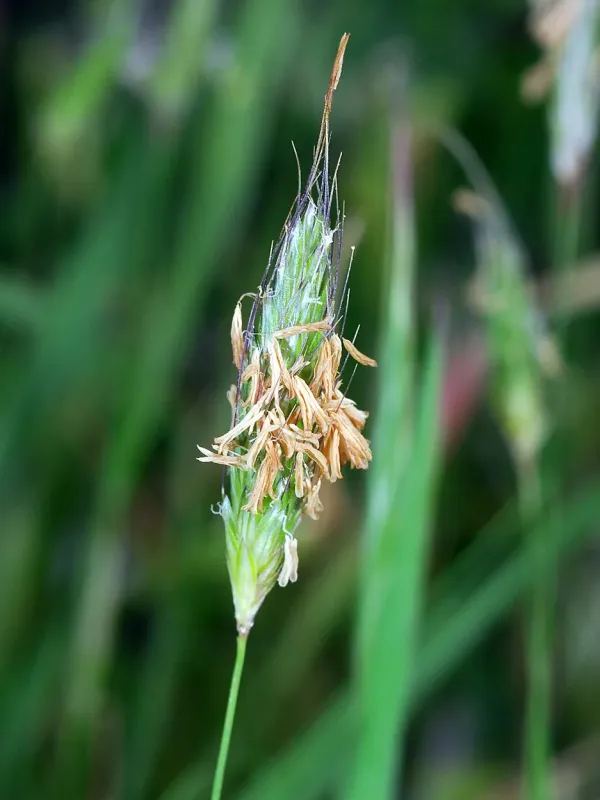
Description
Sowing dates
Creeping foxtail is a perennial grass species belonging to the Poaceae family. It is typically sown in early spring or late autumn, allowing the seeds to undergo necessary natural stratification for better germination success.
A well-prepared seedbed is essential for this crop, requiring fine, leveled soil to ensure consistent seed-to-soil contact. Seeds should be sown shallowly, at a depth of about 1–2 centimeters, as they are relatively small and sensitive to deep burial.
Establishing a dense stand requires choosing the correct seeding rate, whether sown as a monoculture or within a meadow seed mix. Proper seed quality and high vigor are key factors in achieving a uniform crop density in the first year of establishment.
During the early seedling stage, creeping foxtail grows slowly and is prone to weed competition. Effective management practices, including light weeding or appropriate site preparation, are necessary during this vulnerable phase.
As the plant matures into its second year, it develops an extensive root system and spreads via rhizomes. This allows it to colonize areas effectively, forming a resilient turf that can withstand grazing pressure and environmental stressors.
Growing requirements
This grass is highly adaptable to moist environments and is commonly found in floodplains, wet meadows, and near water bodies. It can tolerate temporary waterlogging, which is a significant advantage for low-lying agricultural land.
Creeping foxtail thrives in fertile, loamy, or clay-rich soils with a neutral to slightly acidic pH. It performs best in nutrient-dense environments where water is readily available throughout the growing season.
The species exhibits excellent winter hardiness, allowing it to survive harsh winter conditions. While it prefers moist conditions, it does not perform well in highly saline soils or extremely dry, sandy conditions, where productivity may decline.
Adequate sunlight is essential for optimal growth and biomass accumulation, although the grass can tolerate partial shade. Supplementing with nitrogen-based fertilizers can significantly boost forage quality and overall dry matter production.
Water table management is critical; consistently moist, but not stagnant, conditions are ideal. Maintaining soil structure is important, as the plant can be sensitive to severe compaction that limits aeration and root development.
Yield
The productivity of creeping foxtail is highly dependent on moisture levels and soil fertility. Under favorable management, the crop can yield multiple cuts per season, providing a steady source of green forage or hay.
As a forage crop, it is highly palatable and nutritionally dense, containing high levels of protein and minerals. Livestock readily consume it in both fresh grazing systems and as stored winter fodder like hay or haylage.
Peak yield is typically reached between the third and fifth year after establishment. Regular fertilization and proper grazing rotations are necessary to maintain productivity levels and prevent the stand from thinning over time.
Seed production yields can reach significant quantities under professional cultivation. Harvesting must be timed precisely to avoid excessive seed shatter, which is a common characteristic of many Alopecurus species.
Total dry matter yield per hectare varies based on the regional climate and management intensity. When managed effectively, it remains a reliable, long-lasting component of productive agricultural grasslands.
Main diseases and pests
Rust diseases are common in creeping foxtail, especially during seasons with high humidity and moderate temperatures. These fungi affect leaf health and can reduce the overall quality of the harvested hay.
Insect pests, such as grass flies and aphids, can damage young shoots and developing flower heads in the spring. Integrated pest management (IPM) practices are usually sufficient to manage these threats.
Crop rotation and selecting resistant cultivars are the primary preventative measures against disease outbreaks. Maintaining a healthy soil nutrient balance, particularly with potassium, helps bolster the plant's natural immune response.
Field hygiene, including the removal of infected plant debris after harvest, helps reduce the inoculum load for the following season. Scouting the fields early allows for timely intervention if pest populations reach economic thresholds.
Harvesting
Hay production should occur at the early heading stage to capture the highest nutritional value before the plant diverts energy into seed production. Cutting at this time ensures a balance between biomass volume and protein content.
When used for grazing, rotational systems are recommended to prevent overgrazing and damage to the root system. Creeping foxtail recovers quickly after grazing, making it an excellent candidate for intensive pasture management.
Seed harvesting should be performed using specialized combines when the lower parts of the inflorescence start to brown. Post-harvest, seeds must be dried and cleaned promptly to ensure storage longevity.
Mechanical harvesting techniques such as mowing and conditioning can accelerate the drying process, ensuring the hay retains its color and nutrient profile. Proper storage in dry, well-ventilated barns is essential to prevent mold growth.
Ongoing monitoring of field recovery after harvesting is necessary to determine the optimal time for the next cut or grazing cycle, ensuring the longevity of the perennial stand.