
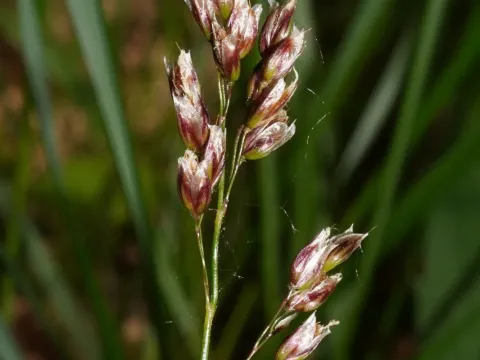
Southern sweetgrass
Anthoxanthum australe
Southern sweetgrass is a perennial herb belonging to the Poaceae family. Sowing is typically performed in the spring when soil temperatures reach 8–10 degrees Celsius.
What the section contains
Southern sweetgrass
Winter sowing allows seeds to undergo natural stratification, which significantly improves germination rates once the soil warms up.
Seeds should be planted at a shallow depth of 1–2 centimeters, as deep burial can inhibit the emergence of delicate seedlings.
Industrial cultivation uses row seeding methods to facilitate weed control and maintenance throughout the growing season.
Consistent soil moisture is vital during the establishment phase, as the young grass is highly susceptible to drought in its first year.
The plant thrives in sunny locations with well-draining, fertile loamy or sandy soils. It is intolerant of waterlogged conditions and standing groundwater.
Southern sweetgrass prefers neutral to slightly acidic pH levels. Adequate soil structure is essential for the healthy development of its rhizomatous system.
The optimal temperature range for active growth is between 18–25 degrees Celsius, allowing for steady accumulation of biomass and fragrant oils.
Regular applications of organic compost before planting boost long-term soil fertility, supporting several years of harvest.
The species exhibits good cold hardiness, adapting well to various temperate climates while maintaining its growth points throughout winter.
The primary economic use of Southern sweetgrass is for the production of biomass containing coumarin, which provides a distinct, pleasant aroma.
Harvesting is conducted during the full flowering phase to ensure the maximum concentration of essential oils is preserved in the tissues.
Plantation productivity is highest between the second and fourth years, after which the field may require rejuvenation to maintain output.
With proper management and irrigation, it is possible to achieve two harvests per year without harming the long-term health of the plants.
- Flavoring in spirits, alcoholic beverages, and high-end confectionery.
- Medicinal applications in herbal extracts and traditional health products.
- Cosmetic ingredients used for their unique and calming aromatic profile.
Root rot is the most common pathology, often triggered by poor drainage or heavy, compact soils that hold too much moisture.
Fungal diseases like rust can impact leaf health during humid summers, reducing the overall quality of the harvested essential oils.
Wireworms represent the primary pest threat, potentially damaging the roots of young plants and creating gaps in the field layout.
Aphids can accumulate on flower stalks during hot spells, which requires careful monitoring to prevent stress to the crop.
Crop rotation and keeping field densities optimal are essential strategies for mitigating disease pressure and ensuring sustainable production.
Mechanical harvesting is performed using specialized mowing equipment that ensures a clean cut at the appropriate height above the ground.
The freshly cut grass must be transported immediately to drying facilities to prevent heat buildup and the degradation of volatile components.
Controlled air-drying in shaded, well-ventilated barns is necessary to preserve the essential oil composition and the characteristic color of the grass.
Once dried to the specified moisture content, the crop is milled and packaged in airtight containers to prevent loss of aromatic potency.
Rigorous quality control during the harvest and drying process is paramount for meeting industry standards for pharmaceutical and food-grade raw materials.