
Spike dropseed
Sporobolus contractus
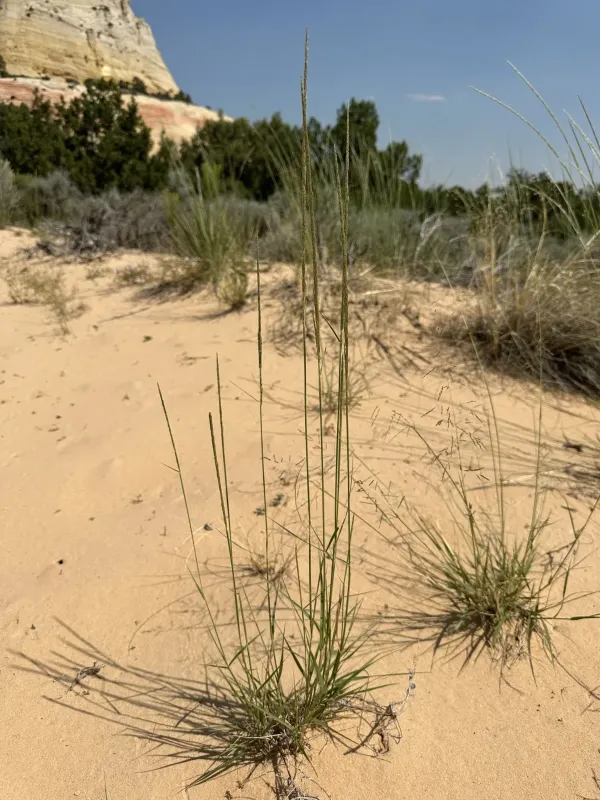
Description
Sowing dates
Sowing of Spike dropseed is recommended during the spring period, once the soil has warmed to a temperature optimal for the germination of grass seeds. It is important to remember that the seeds of this culture are small, so the sowing depth must be shallow to ensure good contact with the substrate.
In arid regions, where this crop is most productive, the optimal time for sowing occurs after the first spring rains. This allows young seedlings to develop their root systems before the heat of summer sets in.
Field preparation requires careful leveling of the surface and the removal of weeds, which could otherwise compete with the slowly developing Spike dropseed seedlings during the initial growth stages.
The seeding rate is determined by the germination rate of the seeds and the desired density of the pasture. Generally, standard rates for small-seeded grasses are employed to create a sustainable ground cover.
To accelerate germination, light rolling of the soil after sowing may be practiced, ensuring optimal capillary water movement toward the seeds.
Growing requirements
Spike dropseed belongs to the Poaceae family and is a typical representative of the steppe and semi-desert ecosystems of North America. This perennial plant is highly adaptive to extremely hot and dry environmental conditions.
The crop prefers well-drained, sandy or loamy soils, although it is capable of growing in various soil types, including saline areas. It exhibits remarkable tolerance to moisture deficits.
The plant tolerates direct sunlight well and does not thrive in shaded conditions, making it suitable for open grazing lands. It is a vital component of natural grassland ecosystems.
The root system of Spike dropseed is deep and branching, which allows it to efficiently extract water from deep soil horizons, ensuring survival during prolonged droughts.
The optimal pH range for growing this crop is neutral to slightly alkaline, which is characteristic of the typical soils found within its natural range.
Yield
The agricultural utility of Spike dropseed is primarily centered on its role as a pasture crop for livestock grazing. During the active vegetative phase, the plant provides satisfactory nutritional value.
Productivity of the stand is heavily dependent on grazing management. Overgrazing can deplete nutrient stores in the rhizomes, so rotational grazing practices are highly recommended.
The plant's biomass during the flowering stage has moderate nutritional quality, though this quality declines rapidly as seeds mature, due to an increase in fiber and lignin content within the vegetative matter.
In dry years, when other grass species wither, Spike dropseed retains its green mass, providing a stable source of forage for livestock in regions with arid climates.
To increase yields on managed land, moderate application of nitrogen fertilizers may be beneficial, although the species is generally undemanding regarding intensive agronomic management.
Main diseases and pests
The crop shows high resistance to diseases common to many cultivated grasses. Rare cases of rust infection may be observed only during years with unusually high humidity.
Regarding pests, the greatest threat comes from orthopteran insects, particularly grasshoppers, which can completely consume leaf mass during periods of high population outbreaks.
Damage to the root system by soil-dwelling larvae is extremely rare and typically does not cause significant economic loss to the stands.
Weed encroachment poses a certain threat to crop purity, as invasive species may colonize thinned patches of the stand if the pasture is subjected to excessive grazing pressure.
Prevention of damage primarily involves strict adherence to grazing schedules, which prevents pasture degradation and helps maintain the overall vigor of the plants.