
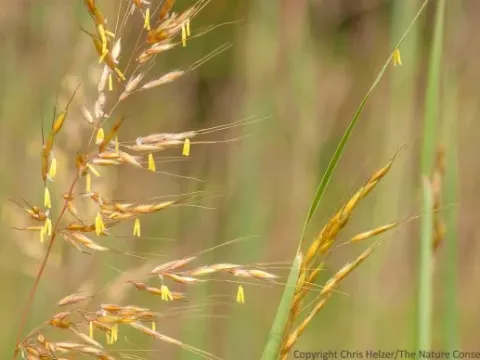
Sorghastrum stipoides
Sorghastrum stipoides
Sorghastrum stipoides is a perennial grass species belonging to the Poaceae family. Sowing should be carried out in early spring once soil temperatures are consistently above 10 degrees Celsius, ensuring optimal germination conditions.
What the section contains
Sorghastrum stipoides
A well-prepared seedbed is essential for this crop. The soil should be plowed to a medium depth and smoothed to allow for precise seed placement, typically at a depth of 1.5 to 2 centimeters.
Drilling is the preferred method for establishing uniform stands, as it ensures adequate seed-to-soil contact and competition control. Post-sowing rolling is recommended to improve moisture retention around the seeds.
During the first year, establishment is slow, so weed control is a critical management priority. Avoiding aggressive competition in early growth phases significantly improves the vigor of the resulting pasture.
Consistent sowing rates and careful site selection contribute to the long-term viability of the stand, allowing for productive harvests for several years to come.
As a thermophilic plant, Sorghastrum stipoides thrives in warm climates and requires high levels of solar radiation. It is not suitable for shaded environments, where biomass production is severely limited.
The crop prefers well-drained loamy or sandy soils, demonstrating good adaptability across various soil types. It performs best in a pH range between 5.5 and 7.0, avoiding overly acidic environments.
While known for its moderate drought tolerance due to an extensive root system, supplemental irrigation during peak summer heat can substantially increase forage yield and overall plant health.
Waterlogging must be avoided, as stagnant water can lead to root rot and poor winter survival rates. Proper site drainage is a fundamental requirement for successful cultivation in wetter climates.
Fertilization with nitrogen and phosphorus is highly beneficial, as the crop is responsive to nutrient inputs that enhance vegetative development and improve the nutritional value of the forage.
Productivity of Sorghastrum stipoides depends largely on management intensity and environmental conditions. It is capable of producing multiple cuts per season in optimal growing environments.
Average dry matter yields can be substantial, with the potential for two high-quality cuttings per year. Harvesting at the late vegetative or early heading stage ensures the best balance of mass and digestibility.
The regrowth capacity is excellent provided that post-harvest moisture levels are sufficient. Leaving a stubble height of at least 10 centimeters helps to protect the growing points and facilitates rapid recovery.
Sustainable grazing management is necessary if the crop is utilized as a pasture, ensuring that the root system is not exhausted by overgrazing during the active growth period.
Overall, with appropriate management, Sorghastrum stipoides serves as a reliable and productive perennial grass that can provide consistent forage for livestock throughout the growing season.
While generally robust, Sorghastrum stipoides can be susceptible to fungal diseases such as leaf rust, particularly in humid or overcrowded conditions. Proper spacing helps maintain good airflow.
Insect pests, including aphids and root-dwelling larvae, may occasionally impact plant vigor. Regular field scouting is recommended to intervene before pest populations reach damaging levels.
Root health is vital; poor drainage often leads to susceptibility to root rots, which can thin the stand over time. Soil structure should be maintained to prevent compaction and saturation.
Effective weed management, particularly in the initial year, is essential for minimizing competition for nutrients and water, which otherwise weakens the perennial grass stand.
An integrated approach to crop protection, focusing on preventative measures and healthy cultural practices, effectively minimizes risks and ensures the long-term success of the agricultural planting.