
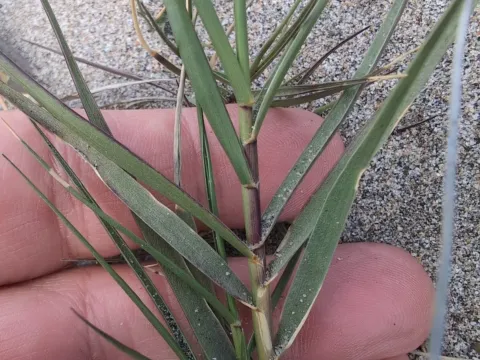
Spartina
Spartina
Spartina is a genus of perennial rhizomatous grasses in the Poaceae family, known for its remarkable adaptability to harsh environments. Sowing is typically performed in the spring when soil temperatures reach 10–12°C, ensuring rapid germination and establishment.
What the section contains
 Common cordgrass
Spartina anglica
Common cordgrass
Spartina anglica
 Giant cordgrass
Spartina cynosuroides
Giant cordgrass
Spartina cynosuroides
 Gulf cordgrass
Spartina spartinae
Gulf cordgrass
Spartina spartinae
 Prairie cordgrass
Spartina pectinata
Prairie cordgrass
Spartina pectinata
 Saltmeadow cordgrass
Spartina patens
Saltmeadow cordgrass
Spartina patens
 Spartina bakeri
Spartina bakeri
Spartina bakeri
 Spartina densiflora
Spartina versicolor
Spartina versicolor
Spartina densiflora
Spartina densiflora
Spartina versicolor
Spartina versicolor
 Townsend's cordgrass
Spartina townsendii
Townsend's cordgrass
Spartina townsendii
Spartina
In many agricultural projects, vegetative propagation through rhizome division is preferred over seeding. This method is particularly effective for establishing stands on degraded, saline, or erosion-prone lands where seed competition with weeds is significant.
When seeding, precise depth control is essential, keeping seeds at 2–3 cm below the surface. A row spacing of 45–60 cm is recommended for the first year to allow mechanical weeding, which helps the young plants gain a competitive advantage.
Preparation of the planting site includes clearing previous vegetation and ensuring adequate soil moisture. Once established, Spartina forms a dense, aggressive root system that effectively outcompetes invasive species and stabilizes the soil structure.
Good soil contact after planting, achieved through rolling, is critical for successful rooting. As a perennial crop, initial establishment requires patience, but it pays off with years of low-maintenance productivity and soil health benefits.
Spartina is widely recognized as a halophyte, capable of thriving in high-salinity soils where conventional crops fail. This makes it an ideal candidate for reclaiming coastal marshes, salt flats, and areas affected by saline irrigation.
The plant demonstrates significant climate versatility, with certain species showing strong cold tolerance. While it prefers moist, well-hydrated soils, it is exceptionally durable and can withstand periodic flooding and anaerobic soil conditions.
Soil type adaptability is high, as the plant grows well in substrates ranging from sands to heavy silts and clays. While it does not require intensive fertilization, nitrogen application during the early vegetative phase significantly boosts growth.
Optimum pH levels for Spartina are quite broad, allowing for successful growth in diverse geographical regions. Its physiological mechanisms allow it to maintain water balance even under high osmotic pressure caused by soil salt concentration.
Water availability is the primary factor for maximum biomass production. Although it is salt-tolerant, it will respond vigorously to supplemental irrigation in arid regions, resulting in increased yield and faster ground cover formation.
Spartina yield is impressive, potentially reaching 15–20 tons of dry matter per hectare under optimal conditions. This makes it a sustainable source of biomass for both livestock feed and industrial applications.
The plant has gained attention as an energy crop due to its high cellulose content. Biomass from Spartina is effectively converted into pellets and briquettes, serving as a renewable solid fuel with high energy density for heating purposes.
Environmental services represent a major use of the crop, as Spartina is used extensively in phytoremediation. Its roots act as filters, absorbing heavy metals and excess salts, which helps restore the agricultural productivity of degraded soil profiles.
For forage production, early harvesting is critical to maintain nutritional value, as the stalks can become lignified and tough as the plant matures. When harvested at the right stage, it provides a reliable source of coarse roughage for cattle.
Its role in erosion control is unmatched; the underground network of rhizomes anchors the soil firmly, protecting riverbanks and coastline from wave action and wind. This dual purpose of biomass production and land protection adds significant value to the crop.
Rust fungi are the most common pathogens affecting Spartina, especially in regions with high humidity and poor air circulation. While usually not lethal, heavy infections can reduce the overall vigour and biomass quality of the stand.
Pests such as aphids and specific beetles may occasionally colonize the plants. Integrated pest management strategies, focusing on regular scouting and biological control, are usually sufficient to manage these populations without extensive chemical use.
Competition from weeds is only a major threat during the seedling stage. Once the dense rhizome mat is formed, very few plants can penetrate or displace a mature Spartina stand, which provides natural protection against infestation.
Environmental stress, such as extreme, prolonged drought during the establishment phase, can lead to thin stands. Utilizing certified, high-quality planting material significantly reduces the risks of failure due to genetic or health-related issues.
Fostering a healthy ecosystem around the planting site supports beneficial predators that manage pest populations. Sustainable management practices ensure the long-term viability of the crop without depleting the surrounding soil biota.
Harvesting is typically conducted using heavy-duty forage harvesters. For feed, cutting should occur before the seed-head matures to ensure the highest protein-to-fiber ratio and palatability for livestock.
When intended for biofuel production, harvest is delayed until late autumn or early spring. This allows the stalks to dry naturally in the field, reducing the energy required for mechanical drying and storage operations.
Stubble height is an important management factor; keeping it at least 10–15 cm ensures that the plant has enough energy reserves in the rhizomes to regrow quickly during the following season, allowing for multi-year usage.
The gathered material is baled or ensiled to prevent spoilage. Proper stacking and storage conditions are required to maintain quality if the biomass is intended for commercial sale or long-term industrial use.
The durability of the plant allows the use of heavy machinery for harvesting with minimal impact on the root system. This efficiency makes large-scale production of Spartina economically viable in various environmental conditions.