
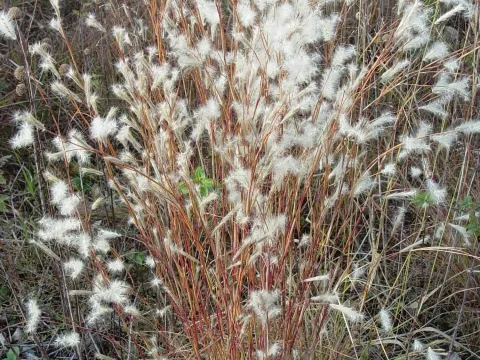
Splitbeard bluestem
Andropogon ternarius
Splitbeard bluestem is best sown in early spring once soil temperatures have consistently risen. The seeds benefit from a period of stratification to improve germination rates, particularly in regions with cold winters.
What the section contains
Splitbeard bluestem
Field preparation starts in the autumn with deep plowing to incorporate organic matter. Before spring sowing, the soil surface should be smoothed to ensure shallow seed placement, as the seeds are quite small.
Planting depth should be kept to a minimum, ideally between 1 and 2 centimeters. Placing seeds deeper than this often prevents them from reaching the surface before the initial energy stored in the seed is exhausted.
Using a row-seeding method is recommended for easier maintenance during the first growing season. Keeping rows spaced out allows for effective weed management until the plants become fully established.
Seedlings typically emerge within two to three weeks under optimal conditions. During this establishment phase, moisture management is critical, as young plants are vulnerable to drought until their root systems penetrate deeper.
Splitbeard bluestem, known botanically as Andropogon ternarius, is a perennial grass species belonging to the Poaceae family. It is native to the southeastern United States, often thriving in prairies and dry woodlands.
This species is highly drought-tolerant, adapted to survive in poor, nutrient-deficient soils, including sandy or acidic substrates. It is a robust plant that requires little external input once it is firmly established.
The plant demands full sun exposure to thrive. Shade significantly reduces both its vegetative vigor and its characteristic aesthetic appeal, leading to spindly growth and diminished seed production.
Good soil drainage is essential for the long-term health of the plant. While it is hardy, it does not tolerate waterlogged conditions, which can lead to root rot and eventual stand depletion.
As a C4 grass, it performs best during the hottest months of the year, demonstrating high photosynthetic efficiency. It is well-suited for hot climates where other cool-season forage grasses struggle to maintain growth.
The primary use of Splitbeard bluestem is in land restoration and erosion control. Its extensive root system helps to stabilize loose soil on steep embankments and degraded landscapes.
While it can be grazed by livestock, its forage value is relatively low compared to specialized pasture grasses. Palatability decreases significantly as the plant matures and the stems become more fibrous.
Yields of biomass are generally moderate. Management should focus on the timing of harvest to maximize structural integrity if the grass is intended for environmental purposes or seed collection.
The plant is frequently utilized in natural landscaping and wild gardens. Its distinct silvery-white plumes are highly valued for their ornamental quality, persisting through much of the autumn.
Seed production requires careful management of the harvest cycle. Leaving the plants undisturbed during the late summer months ensures that the seed heads reach full maturity.
Splitbeard bluestem is remarkably resistant to most common agricultural pests. Its leaves and stems contain high levels of silica and are quite tough, discouraging many insect species from feeding on them.
The most significant threat to a new stand is competition from invasive weeds. During the establishment year, regular monitoring and manual or mechanical control are necessary to prevent the stand from being choked out.
Root rot is the most common pathology, usually triggered by poor drainage or over-irrigation. Proper site selection and avoiding water accumulation in the soil are the primary preventive measures.
Rust fungi can occasionally affect the foliage during periods of extreme humidity and low airflow. Maintaining proper spacing between rows helps to ensure adequate ventilation and reduces the risk of fungal spread.
Large animal pressure should be monitored if the grass is used in a grazing system to prevent overgrazing, which can weaken the crown and reduce the plant's ability to regenerate in subsequent years.