
Reference · Crops
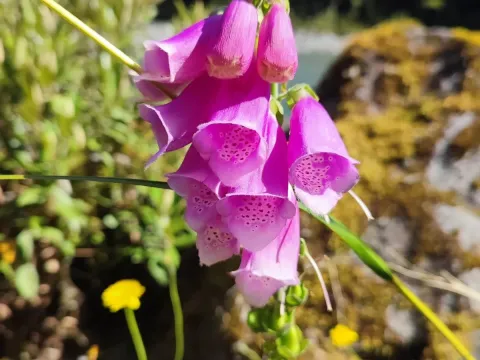
Foxglove
Digitalis L.
Foxglove (Digitalis L.) is a biennial plant that typically develops a basal rosette of leaves during its first year of growth. Sowing is generally conducted in the spring as soon as the soil warms up or in late autumn as a dormant seeding.
16
items
What the section contains
 Woolly foxglove
Digitalis lanata Ehrh.
1 product
Woolly foxglove
Digitalis lanata Ehrh.
1 product
 Canary Island foxglove
Digitalis canariensis L.
Canary Island foxglove
Digitalis canariensis L.
 Copper foxglove
Digitalis chalcantha (Svent. & O'Shan.) Albach et al.
Copper foxglove
Digitalis chalcantha x Digitalis purpurea
Copper foxglove
Digitalis chalcantha (Svent. & O'Shan.) Albach et al.
Copper foxglove
Digitalis chalcantha x Digitalis purpurea
 Digitalis dubia
 Barb. Rodr.
Digitalis dubia
Digitalis dubia Barb. Rodr.
 Digitalis isabelliana
 (Webb) Linding.
Digitalis isabelliana
Digitalis isabelliana (Webb) Linding.
 Digitalis purpurea
 L.
Digitalis purpurea
Digitalis purpurea L.
 Digitalis xvalinii
 J. D. Arm.
Hybrid of Digitalis chalcantha and Digitalis grandiflora
Digitalis chalcantha (Svent. & O'Shan.) Albach et al. x Digitalis grandiflora Mill.
Digitalis xvalinii
Digitalis xvalinii J. D. Arm.
Hybrid of Digitalis chalcantha and Digitalis grandiflora
Digitalis chalcantha (Svent. & O'Shan.) Albach et al. x Digitalis grandiflora Mill.
 Large yellow foxglove
Digitalis grandiflora Mill.
Large yellow foxglove
Digitalis grandiflora Mill.
 Rusty foxglove
Digitalis ferruginea L.
Rusty foxglove
Digitalis x fulva Lindl.
Siberian foxglove
Digitalis x sibirica Lindl.
Rusty foxglove
Digitalis ferruginea L.
Rusty foxglove
Digitalis x fulva Lindl.
Siberian foxglove
Digitalis x sibirica Lindl.
 Small-flowered foxglove
Digitalis parviflora Jacq.
Small-flowered foxglove
Digitalis parviflora Jacq.
 Spanish foxglove
Digitalis thapsi L.
Spanish foxglove
Digitalis thapsi L.
 Yellow foxglove
Digitalis lutea L.
Yellow foxglove
Digitalis lutea L.
Marketplace
Products in this section · 2

Foxglove
The seeds are extremely small and require surface sowing without deep burial; they should be lightly pressed into the soil to maintain good contact. Consistent moisture is critical during germination, as the seeds are sensitive to drying out.
Commercial cultivation often utilizes the seedling method, allowing for stronger rosettes by the end of the first season. Transplanting to the permanent location should occur when the plants reach the 4–6 true leaf stage.
Planting patterns must accommodate mechanical inter-row cultivation, with an optimal spacing of 30–40 centimeters between plants to ensure proper air circulation and reduce disease pressure.
While foxglove is highly adaptive to different sowing times, early spring seeding is preferred to establish a robust root system capable of overwintering successfully in temperate climates.
Digitalis belongs to the Plantaginaceae family and thrives in well-drained, fertile, loamy soils with a near-neutral pH level. Soil drainage is the most important factor in site selection.
The plants prefer sunny locations but can tolerate partial shade, making them versatile for various agricultural settings. Adequate humidity and soil moisture during the first half of the season are vital for foliage development.
Stagnant water is detrimental to foxglove, as it quickly leads to root rot in waterlogged conditions. Growers should avoid low-lying fields where rainwater or snowmelt tends to accumulate.
Agricultural practices include incorporating organic matter before planting and providing phosphorus-potassium fertilizers to improve plant health. Regular irrigation during dry spells is essential, particularly for younger plants.
Winter hardiness is relatively high if covered by snow; however, in regions without reliable snow cover, mulching the root zone with straw or peat helps protect the plants from extreme temperature fluctuations.
Fungal diseases are the primary threat, with powdery mildew often appearing during hot and humid weather. Maintaining proper spacing and air circulation between plants is the most effective preventative measure.
Gray mold is another significant issue that causes lesions on leaves and stems. Management involves removing infected plant tissue immediately and applying fungicides according to safety standards for medicinal crops.
Pests such as aphids and leaf beetles can cause substantial damage to the foliage. Chemical control measures must be applied cautiously, especially when the crop is intended for pharmaceutical use.
Root rots are frequently associated with poor soil aeration and improper watering techniques. Regular inter-row cultivation helps maintain soil structure and prevents the buildup of soil-borne pathogens.
Crop rotation is mandatory to prevent the accumulation of specific pathogens in the soil. Ideally, foxglove should not be replanted on the same plot for at least 3 to 4 years.
The primary economic use of Digitalis is the harvesting of leaves for the extraction of cardiac glycosides. The harvest typically takes place at the end of the first year or when the plant begins to flower in the second year.
Leaves are hand-picked to avoid damaging the central rosette, allowing for subsequent growth. For optimal pharmacological potency, harvesting should be performed during dry, sunny weather.
Immediate drying in specialized climate-controlled facilities at temperatures between 50 and 60 degrees Celsius is necessary to preserve the stability of the active medicinal compounds.
In large-scale production, multiple harvests per season are possible, significantly increasing total yield. Workers must wear protective gear during harvesting, as all parts of the plant are toxic if ingested.
Storage of the finished product requires cool, dark, and dry conditions in airtight containers to prevent moisture absorption and the degradation of the plant's medicinal properties.