
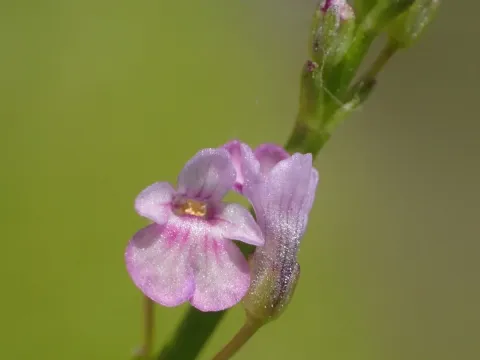
Dopatrium
Dopatrium
Dopatrium is not a conventional agricultural crop, but its lifecycle is strictly governed by the seasonal wetting and flooding of its natural tropical habitats.
What the section contains


Dopatrium
Seeds exhibit a long-term dormancy period, triggered specifically by the onset of monsoon rains which saturate the soil and stimulate the germination process.
For cultivation purposes, simulating these natural hydration cycles is essential to achieve a successful germination rate in controlled greenhouse environments.
Sowing should occur in nutrient-rich, silty substrates that mimic the natural deposits found along the margins of freshwater ponds and periodically flooded lowlands.
The timing of sowing must be synchronized with temperature stabilization to ensure that the fragile seedlings are not exposed to cold stress during their early stages.
The genus Dopatrium belongs to the Plantaginaceae family and consists of herbs that are well-adapted to aquatic or semi-aquatic environmental conditions.
These plants require high levels of solar irradiance for optimal photosynthesis, making them unsuitable for shaded areas where growth would be severely stunted.
A soil environment rich in organic matter and minerals is necessary for the plant to thrive, as it primarily relies on these nutrients during its rapid growth phase.
Temperature is a critical factor, with the plant showing optimal development in warm, tropical conditions that maintain a consistent metabolic rate.
The plant possesses specialized morphological structures, such as fleshy stems and decussate leaves, which are adaptations to facilitate life in water-saturated environments.
Habitat loss due to large-scale drainage projects and land conversion for industrial or urban use remains the primary threat to Dopatrium species survival.
Invasive plant species often outcompete Dopatrium for essential space and light resources, leading to the fragmentation of their native plant communities.
Runoff containing agricultural chemicals, particularly fertilizers and herbicides, creates toxic conditions that prevent proper seed development and vegetative growth.
Pathogenic fungi can infect the stems when water quality degrades or aeration is insufficient, leading to rapid decay of the plant tissue under high humidity.
Herbivorous aquatic invertebrates and mollusks represent a constant threat, as they feed on the young shoots and leaves, hindering the plant's reproductive cycle.