

SKU #418
·
688 views
Polyus
Herbicides, Desiccants
Агро-СоюзUser rating
1 vote100% positive reviews
No ratings yet — be the first.
Last Processing Date, Days
1
By Mode of Action
Selective herbicide
By Application Timing
Post-emergence herbicide
Form of the preparation
Aqueous Solution
About product
A post-emergent selective herbicide designed to control various types of bindweed, chamomile, and groundsel on cereals, corn, sugar beet, white cabbage, rapeseed; with perennial and some annual dicotyledonous plants on strawberries, ryegrass annual, woolly fingers; with various types of bindweeds on flax; with chamomile, bindweed, buckwheat, groundsel in lavender; with chamomile, bindweed, buckwh…
Last Processing Date, Days
1
By Mode of Action
Selective herbicide
By Application Timing
Post-emergence herbicide
Form of the preparation
Aqueous Solution
Description
A post-emergent selective herbicide designed to control various types of bindweed, chamomile, and groundsel on cereals, corn, sugar beet, white cabbage, rapeseed; with perennial and some annual dicotyledonous plants on strawberries, ryegrass annual, woolly fingers; with various types of bindweeds on flax; with chamomile, bindweed, buckwheat, groundsel in lavender; with chamomile, bindweed, buckwheat, dandelion on lawns and others.
Advantages:
irreplaceable herbicide in the fight against hard-to-eradicate weeds such as species of bindweed, chamomile, groundsel, etc.;
distinguished by high biological effectiveness;
due to its systemic action, it destroys not only the aboveground part but also the root system of weeds;
characterized by a high selectivity for protected crops;
provides protective effect throughout the growing season;
exhibits synergism in mixtures with other herbicides recommended for controlling dicotyledonous and cereal weeds.
Formulation:
Aqueous solution containing 300 g/l of clopyralid
Mechanism of action:
It has a systemic effect, easily penetrates the plant, mainly through the leaves (but can also through roots); quickly spreads throughout the plant, including the root system, blocking the growth points of meristematic tissues. Kills both aboveground and underground parts of weeds, including vegetative renewal buds and root shoots. For susceptible weed species, the drug acts as a regulator of auxin-type growth.
Period of protective action, rate of exposure
Provides protection to the crop from weeds throughout the growing season. The growth of sensitive weeds stops within 2 hours after treatment. Visible symptoms of effects appear within 4-7 days, death of weeds - in 10-15 days. Effectiveness and rate of exposure is determined by application rates, weather conditions, and weed condition at the time of herbicide application.
Spectrum of action
Perennial and annual dicotyledonous weeds
Sensitive species: common cocklebur, field thistle, blue cornflower, wild vetch, groundsel (species), tartary buckwheat, middle starwort, common field mustard, mare's tail (species), dandelion (species), bindweed (species, incl. Tatar milkweed), shepherd's purse, black nightshade, field cudweed, chamomile (species), dodder (species).
Moderately susceptible species: field windworm, garden purslane, wild radish.
Field of application Wheat winter and spring, barley, oats, millet, corn, sugar beet, flax, white cabbage, strawberries, rape (seed crops), ryegrass annual, woolly fingers, lavender, lawns, heart-leaved mclea
Compatibility
Can be applied separately or in combination with phenoxypropionic herbicides, as well as with herbicides based on 2,4-D. To expand the spectrum of suppressible weeds, it is recommended to use in tank mixtures with herbicides for the destruction of dicotyledonous (Desormone, Lintangplant, Fenizan, Betaren FD-11, Betaren Express AM and others) and cereal (Furex, Panther and others) weeds.
Resistance
No resistance has been detected, however, to avoid the emergence of resistance, it is necessary to alternate the application of drugs from different chemical groups with a different mechanism of action.
Application technology
For maximum herbicidal effect, a solution temperature of plus 10°C to plus 20°C is desirable. In case of high infestation and active vegetation of weeds, use the maximum recommended dose. Prepare the working solution immediately before application. The working solution should be used on the day of preparation. Fill one third of the sprayer tank with water, pour the full dose of the drug and add the remaining amount of water. The preparation of a working solution and filling the sprayer must be carried out in special places, which will subsequently undergo decontamination. In the absence of mechanization facilities for preparing working solutions of the drug is not allowed. Optimal result and fastest herbicidal action of the drug are achieved: — when applied to leaves of young actively growing weeds; — when processing culture at an air temperature above plus 10°C (at reduced air temperatures below plus 10°C, herbicide effect of the drug slows down); — by applying the drug as part of tank mixtures.
Application rates: "Poles" is registered for application on many crops:
Crop Application rate of preparation, l/ha
Winter and spring wheat, barley, oats, millet 0.16-0.66
Corn 1
Sugar beet 0.3-0.5
Flax 0.1-0.3
White cabbage 0.2-0.5
Strawberries 0.5-0.6
Rape (seed crops) 0.3-0.4
Ryegrass annual 0.3
Lawns 0.16-0.66
Lavender 1-1.7
Woolly fingers 0.2-0.3
Heart-leaved mclea 0.3-0.4
Method and timing of application: cereals are sprayed in the tillering phase of the crop before earing, corn - at the stage of 3-5 leaves, sugar beet - at the stage of 1-3 true leaves of the plant, flax - at the "Christmas tree" phase of the plant during the rosette phase of weeds, cabbage - after transplanting seedlings, strawberries - after harvest, rape - at the stage of 3-4 leaves of the plant.
Phyto toxicity
When observing recommendations for terms and norms of introduction of preparation cases of display of phytotoxicity in relation to the applied cultures are not revealed.
Recommendations on protection of useful objects of flora and fauna, restrictions
The drug is practically harmless to bees - class 4 of danger.
Transportation and storage conditions
Observe all generally accepted rules for transporting toxic substances. Store the preparation in a pesticide storage room. Temperature interval for storage from minus 25°C to plus 25°C.
Guarantee
Shelf life is 2 years.
Hazard class III
Packaging p/e canister 20 l
Composition
Active ingredients
- Clopyralid гербицид
Application
Used on crops
Against weeds
Specifications hover over for a hint about the specification
|
Last Processing Date, Days
Last Processing Date, Days
Number of days from processing to harvest cleanup |
1 |
|---|---|
|
By Mode of Action
By Mode of Action
Herbicides are divided into two groups according to their mode of action: Non-selective herbicides — intended for the destruction of all plant species. They are applied in agricultural fields during the absence of the main crop (after harvest, before crop emergence, on fallow lan... |
|
|
By Application Timing
By Application Timing
Herbicides are classified according to application timing into pre-emergent and post-emergent herbicides. Pre-emergent herbicides are mostly soil-applied or granular formulations applied before the emergence of crop plants. They are applied either pre-sowing (during pre-sowing cu... |
|
| Form of the preparation | |
|
Drug Consumption
Drug Consumption
Mass of the preparation per unit of treated area. It is customary to express the dosage rate in kilograms per hectare. The dosage rate is most often given in terms of 100% active ingredient, although sometimes it is calculated based on the preparation in the form of application w... |
From 0.5 - 1.0 L/ha |
|
By type of action
By type of action
Depending on their ability to move through living tissues, herbicides are divided into contact and systemic. Contact herbicides cause local damage to plant tissue upon contact, which dies or gradually degrades. This action does not always completely destroy the plant; often, its... |
|
|
By application method
By application method
Based on the method of application, herbicides are divided into foliar, soil, and root herbicides. Foliar herbicides are applied to vegetative plants and act through their above-ground organs. The main method of application for such preparations is spraying using sprayers or airp... |
|
| Catalog | Catalog → Herbicides, Desiccants |
| Manufacturer | Агро-Союз |
| Country | Ukraine |
Store offers
Prices are updated on loadLoading offers…
Aggregator catalog: prices are collected automatically from store websites, normalized by AI and converted at the current exchange rate. Before ordering, confirm the price and availability on the store's website. This block is not indexed by search engines — the data is loaded after the page opens.
Not yet комментариев. Be the first!
Alternatives
Herbicides, Desiccants · similar preparations


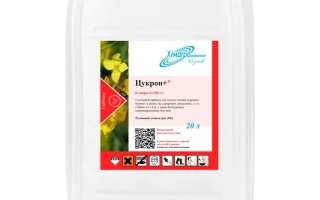




CUKRON + V.R., (CLOPIRACLID, 300 G/L)
Sunrise Agrochemical Co., Ltd.
044 7 offers
17.35 €per 1 l ≈ 896 ₴
See also
Often considered together with this product


Tom, c.i., (alpha-cypermethrin, 100 g/l)
China Chemical Industrial & Rice Co. Ltd
060 2 offers
6.94 € ≈ 358 ₴

Recently viewed
Products you’ve viewed on this site
Reviews · 0