
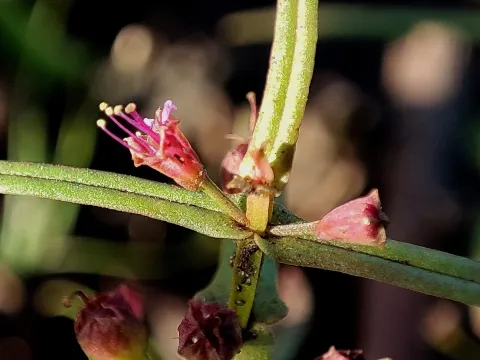
Ammannia multiflora
Ammannia multiflora
Ammannia multiflora, commonly known as the many-flowered ammannia, is a herbaceous annual belonging to the Lythraceae family. This species is widely distributed across tropical and subtropical regions, typically inhabiting wetlands, riverbanks, and agricultural fields such as rice paddies.
What the section contains
Ammannia multiflora
The plant is characterized by its branched stem, which can reach heights of up to 40 centimeters. It features sessile, opposite, linear-lanceolate leaves, which are adapted to both terrestrial and semi-aquatic growing conditions, reflecting the high plasticity of the species.
Environmental requirements for this plant are centered on moisture availability. It thrives in soils that are consistently saturated or frequently submerged, making it a common associate in irrigation-dependent crop systems where standing water is present.
Temperature plays a crucial role in the lifecycle of Ammannia multiflora, as it is a thermophilic plant that requires high warmth for germination and flowering. It cannot tolerate frost, which restricts its active growth phase to the warmest periods of the year.
From an agronomic perspective, managing the soil nutrient profile and water levels is essential for controlling the plant's growth. In environments where it is considered a weed, moisture drainage and targeted herbicide applications are standard practices for suppression.
The primary threats to Ammannia multiflora populations in agricultural settings are selective herbicides and mechanical weeding methods designed to reduce weed competition with primary crops like rice.
Fungal pathogens represent a significant biological threat, particularly in conditions of high humidity, which can promote the development of leaf spots and root rot, weakening the plant's overall vigor.
Insect pests, including various snails and leaf-chewing insects, pose a moderate threat to the foliage, especially during the early stages of plant development when the tissues are soft and succulent.
Environmental stress, such as sudden drought or soil compaction, significantly limits the plant's ability to compete. The species is highly specialized for wet environments, and any deviation from these conditions compromises its growth cycle.
Integrated pest management strategies are often employed to maintain control over such species in fields, ensuring that the ecological balance is maintained while protecting the target crop yields from unwanted vegetation.