
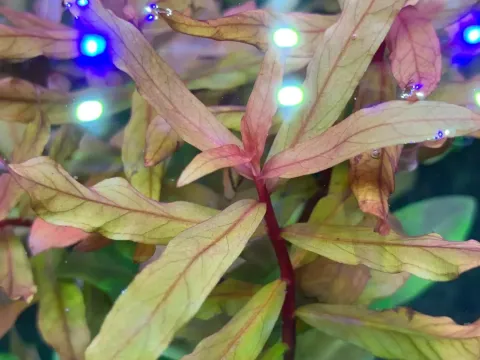
Ammannia gracilis
Ammannia gracilis
Ammannia gracilis is not a conventional agricultural crop but an ornamental plant widely cultivated in the aquarium industry. Propagation is achieved exclusively through stem cuttings.
What the section contains
Ammannia gracilis
To propagate, select a healthy, vibrant stem and prune a segment of approximately 10 to 15 centimeters. Ensure the cutting has enough nodes to facilitate rapid root development.
The cuttings should be planted into a nutrient-rich, fine-grained substrate. Proper spacing is critical to ensure that light reaches the base of the plant to prevent leaf decay.
Successful rooting requires stable water temperatures between 22 and 28 degrees Celsius. Avoid frequent relocation of the stems during the first few weeks to allow roots to anchor firmly.
Adequate water circulation around the base of the stems promotes gas exchange and nutrient uptake. Following these steps ensures a high success rate in establishing new clusters.
This species belongs to the Lythraceae family and originates from the marshy environments of Western Africa, adapting well to aquatic or semi-aquatic conditions.
High light intensity is the most critical requirement for maintaining its iconic copper-red foliage. Without sufficient light, the plant will become spindly and turn green.
The addition of CO2 injection is essential for optimal growth. Furthermore, regular dosing of liquid fertilizers, particularly those rich in iron, is necessary for color development.
Water quality should be strictly monitored, preferring soft to moderately hard water with a slightly acidic to neutral pH. Frequent water changes are recommended to refresh minerals.
Recommended environmental parameters:
- Water Temperature: 22–28°C (72–82°F)
- pH range: 6.0–7.5
- Water hardness: 2–12° dGH
Algal blooms are the primary threat to the health of the leaves. High light levels required for the plant can trigger algae growth if nutrient levels are not perfectly balanced.
Nutrient deficiencies, especially regarding iron and potassium, often manifest as yellowing or necrotic spots on older leaves. Regular monitoring of water chemistry is vital.
Stem rot can occur if the substrate becomes anaerobic or if the plant is subjected to sudden temperature fluctuations. Proper drainage and aeration of the substrate are preventative measures.
Stress from sudden shifts in water parameters can lead to immediate leaf drop. Maintaining stability in the aquarium environment is the best defense against such health issues.
Some herbivorous aquatic fauna may graze on the soft tissues of the plant. Selection of appropriate tank mates is essential for maintaining the integrity of the foliage.