
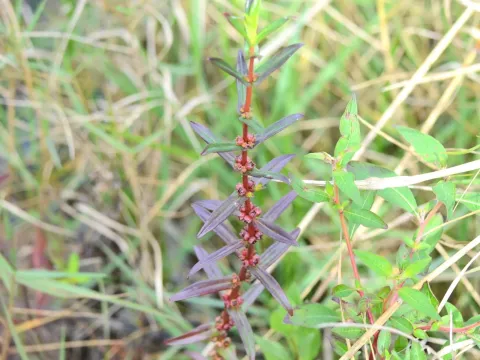
Ammannia latifolia
Ammannia latifolia
Ammannia latifolia is a tropical species that requires controlled environment agriculture for successful propagation. Seeds are extremely fine and are sown onto a moist, sterile growing medium without being buried, as they require light for germination.
What the section contains
Ammannia latifolia
The propagation process involves maintaining a high humidity level, often exceeding 90%, within a greenhouse or specialized growth chamber. Consistent temperatures ranging from 25 to 28 degrees Celsius are essential to ensure uniform seedling emergence.
Standard practices include the use of peat-based or synthetic substrates that are free from pathogens. Proper spacing during the seedling phase is critical to prevent overcrowding, which can lead to competition for light and increased vulnerability to disease.
Once seedlings have developed several true leaves, they are hardened off by gradually reducing humidity levels. This stage is vital for the survival of the plants when moved to decorative environments or aquatic systems.
Artificial lighting is frequently utilized during the winter and early spring to compensate for natural light deficiencies. This promotes robust growth and ensures that the plants reach a commercial size within the expected time frame.
As a member of the Lythraceae family, Ammannia latifolia thrives in environments that mimic natural wetland conditions. It prefers nutrient-rich, slightly acidic to neutral soils or aquatic substrates with high organic content.
Light intensity is one of the most important factors for the plant's health and coloration. High-intensity lighting stimulates the production of pigments that give the leaves their characteristic reddish-brown hue.
Water quality, including parameters like pH and mineral content, must be strictly monitored. The plant is particularly sensitive to iron deficiencies, which quickly manifest as chlorosis on the younger, upper leaves of the specimen.
A stable temperature environment is mandatory. Cold drafts or temperature drops below 20 degrees Celsius will significantly hinder physiological processes and may lead to tissue necrosis in the delicate stems of the plant.
Effective ventilation is required to keep the foliage dry during the night, reducing the risk of fungal outbreaks. Providing a constant supply of CO2 in closed systems can also significantly boost the growth rate of this species.
Fungal pathogens such as mildew and various root rots are the primary threats to Ammannia latifolia. These diseases often emerge due to improper watering techniques, poor air circulation, or the use of contaminated equipment.
Spider mites are a common greenhouse pest that can devastate a crop if not caught early. They thrive in the warm, slightly humid conditions favoured by the plant, making regular inspections essential for integrated pest management.
Aphids can cause significant damage by feeding on the apical buds, which stunts growth and leads to deformed foliage. Biological controls, such as predatory insects, are often preferred over chemical pesticides in sensitive aquatic setups.
Root-knot nematodes can infect the root system, causing the plant to lose vigor and stop growing despite optimal environmental conditions. Proactive substrate management and the use of sterile growing media are key prevention strategies.
Nutrient toxicity, particularly from excessive fertilizer salts, can damage root hair function. Flushing the growth medium with distilled or reverse osmosis water periodically helps maintain a healthy ionic balance for optimal development.