
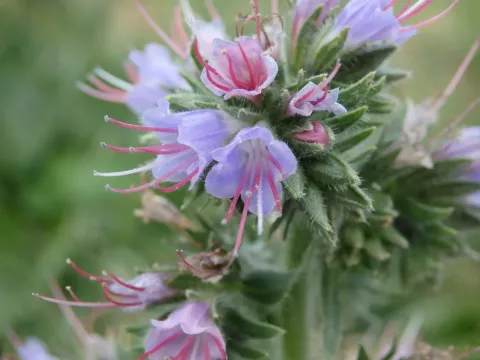
Lusitanian viper's bugloss
Echium lusitanicum
Lusitanian viper's bugloss (Echium lusitanicum) is typically sown in the spring as soon as the soil has warmed up sufficiently following the winter frost. The ideal sowing window generally spans from April to May, depending on the specific climate zone of the cultivation site.
What the section contains
Lusitanian viper's bugloss
Successful germination requires consistent soil moisture during the first few weeks. Seeds should be sown at a shallow depth of approximately 1–2 centimeters, as they require light for the proper activation of the germination process.
For commercial cultivation, it is recommended to maintain row spacings of 45 to 60 centimeters. This distance ensures each plant has sufficient nutrition and space to develop, while also facilitating maintenance activities throughout the growing season.
The sowing rate is determined by seed quality and soil fertility. On average, a rate of 3–5 kilograms per hectare is sufficient to establish a dense canopy that can effectively outcompete weeds in the field.
Seedlings usually emerge within two weeks of planting. During this initial phase, it is crucial to ensure the top layer of soil does not dry out, as this can severely impede the growth of young plants that have not yet established a deep root system.
Lusitanian viper's bugloss, a member of the Boraginaceae family, is a heliophilic plant that thrives in open areas with direct sunlight. Insufficient light often leads to leggy growth and significantly reduces the plant's nectar production potential.
The plant performs best in well-drained, lime-rich, or neutral soils. It exhibits excellent drought tolerance due to a deep taproot that allows it to access water from deeper soil horizons, making it suitable for arid regions.
It performs poorly in waterlogged or acidic soils; therefore, low-lying areas should be avoided when selecting a site for cultivation. Light sandy or loamy soils are ideal for ensuring healthy growth and development.
The climate should ideally be Mediterranean or temperate-continental. While the plant shows moderate frost resistance, it may require protection during exceptionally harsh winters if it is intended to be grown as a long-term perennial crop.
During the vegetative stage, excessive nitrogen fertilization should be avoided, as it tends to stimulate foliage production at the expense of floral development. Balanced phosphate and potassium fertilizers are preferred to boost immunity and bloom intensity.
The primary agricultural value of Lusitanian viper's bugloss lies in its exceptional nectar productivity. It is widely recognized as a premium honey plant capable of sustaining bee colonies with a steady supply of nectar throughout the summer months.
Yields of nectar are highly dependent on weather conditions, with the highest secretions observed during warm periods with intermittent rainfall. In favorable years, the crop can significantly increase the honey yield of nearby apiaries.
Beyond nectar, the plant serves as a vital source of high-quality pollen, rich in proteins and vitamins. This nutritional boost is essential for the rapid development of bee colonies and improves the overall strength of the hive during the peak season.
When grown for seed production, the crop should be harvested once the lower sections of the flower spikes turn brown. This timing is critical to minimize losses caused by the natural shattering of seeds, which are quite small and delicate.
Post-harvest, seeds must be cleaned of plant debris and dried to a moisture content of 10–12%. Properly dried and stored seeds can maintain high germination rates for several years when kept in a cool, dry environment.
Echium lusitanicum possesses a robust natural immune system, yet in dense stands, it may be susceptible to powdery mildew. This fungal infection manifests as a white coating on the foliage and can reduce the plant's vigor if left unmanaged.
Aphids are occasional pests that target the plant by feeding on the sap of young flower spikes. In large-scale operations, these are typically managed using biological controls or specific systemic insecticides if infestation levels cross the economic threshold.
Root rot can occur if soil drainage is inadequate or if the crop is exposed to prolonged waterlogging. Regular cultivation of the inter-row spaces is recommended to improve soil aeration and prevent the buildup of soil-borne pathogens.
Seed-feeding weevils represent another potential threat, as they consume the developing seeds within the pods. This can significantly reduce the quantity and quality of the harvest during seed production cycles.
To prevent the spread of diseases and pests, a strict crop rotation schedule should be followed, with a 3–4 year gap before replanting on the same site. Additionally, keeping the field margins free of weeds is essential, as they often host pests.
Harvesting for seed production requires careful attention to maturity stages. Because the flowers on a spike mature at different times, a two-stage harvesting method—cutting into windrows followed by threshing—is often the most efficient approach.
When using a combine harvester, it is vital to adjust the drum speed to prevent seed damage. Since the seed capsules are quite brittle, mechanical handling must be as gentle as possible to maintain seed viability.
The best time for harvesting is during the early morning or late evening, when higher ambient humidity helps prevent the seeds from shattering upon contact with harvesting machinery.
Once harvested, the plant material must be cleaned immediately using specialized seed-cleaning equipment. Moisture-rich green plant debris left in the pile can cause heating and rapid deterioration of seed quality.
Seeds should be stored in ventilated containers within a controlled, dry environment. Regular monitoring of temperature and humidity levels ensures the seed stock remains in optimal condition until the next planting season.