
Ammannia nodiflora
Ammannia nodiflora
Description
Growing requirements
Ammannia nodiflora is an annual herbaceous plant belonging to the Lythraceae family. While it holds botanical interest, in the agricultural sector, it is primarily identified as a troublesome weed in flooded rice paddies.
The plant originates from tropical and subtropical regions of Africa and Asia. It thrives in humid environments where water availability is consistently high, making it a common sight in irrigation systems and flooded areas.
Ammannia requires saturated, silty, or clay-based soils to flourish. Its lifecycle is strictly tied to water levels, as it is a characteristic hydrophyte that outcompetes native flora in nutrient-rich, waterlogged agricultural soils.
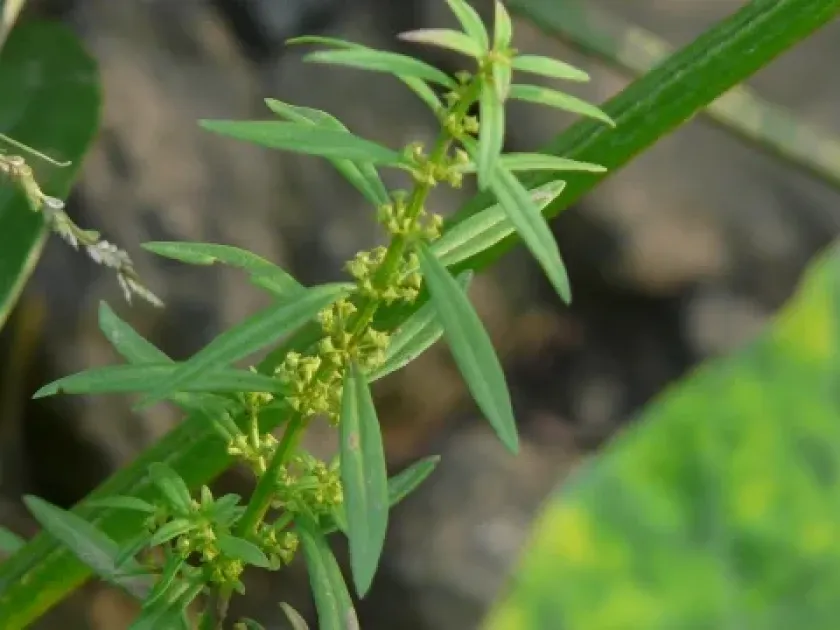
The morphology of the plant includes slender, opposite leaves and small, cluster-like flowers situated at the nodes of the stem. These characteristics allow the plant to produce a significant volume of seeds, ensuring rapid propagation.
Agronomic management involves strict water depth control and the selection of healthy rice seeds. Proper land leveling in paddy fields also prevents localized deep-water zones where Ammannia tends to dominate.
Main diseases and pests
The primary threat posed by Ammannia nodiflora is its aggressive competition for sunlight and nutrients with staple crops like rice. Dense infestations can significantly reduce the yield of high-value crops if left unmanaged.
Effective control measures include the application of selective herbicides during the early stages of weed development. Combining chemical control with proper crop rotation helps in breaking the lifecycle of the weed.
Farmers often utilize mechanical weeding methods in smaller plots, but large-scale production requires integrated pest management (IPM) strategies to address the plant's high fertility and persistence.
The plant acts as a host for various insects and pathogens that can potentially migrate to agricultural crops. Maintaining clean borders around agricultural fields is a critical preventative measure.
Due to the risk of herbicide resistance, it is recommended to monitor the fields regularly and alternate the active ingredients of the chemicals used for weed control to ensure long-term efficacy.