
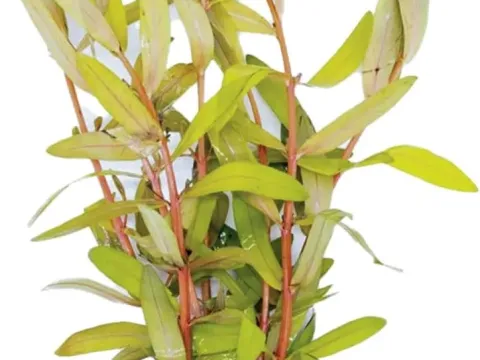
Ammannia pedicellata
Ammannia pedicellata
Ammannia pedicellata is a striking aquatic plant belonging to the Lythraceae family. Native to the wetlands of tropical Africa, it has become a highly sought-after species in specialized aquatic environments due to its unique leaf morphology and vibrant coloration, which can shift from green to deep copper.
What the section contains
Ammannia pedicellata
Botanically, the plant features long, erect stems with leaves arranged in opposite pairs. Its growth rate is directly proportional to the amount of light and nutrients provided. In mature specimens, the plant creates a dense visual cluster, making it an excellent candidate for the middle or background of an aquatic landscape.
The climate requirements for this plant involve stable water temperatures ranging from 22 to 28 degrees Celsius. Ammannia pedicellata thrives in soft to medium-hard water. Stability is key, as fluctuating water chemistry parameters can lead to rapid leaf drop and stunted development of the growing tip.
High-intensity lighting is a fundamental requirement for success. Providing a full spectrum of light for 8–10 hours daily ensures that the plant maintains its intensive coloration. Without sufficient light intensity, the lower sections of the stem quickly become barren as the plant prioritizes energy for the upper leaves.
Soil requirements focus on nutrient-rich substrates with a slightly acidic pH. Incorporating micronutrients directly into the root zone via root tabs or specialized enriched soils allows the plant to develop a robust root system, which is essential for sustained growth and resilience against environmental shifts.
The primary threat to Ammannia pedicellata is the proliferation of unwanted algae. Because this plant requires high light and nutrient levels, it often shares these needs with aggressive algae species that can quickly overtake the leaf surfaces and inhibit photosynthesis.
Nutrient deficiencies, particularly involving iron and potassium, are common. A lack of iron specifically leads to chlorosis, where the leaves lose their vivid color and turn translucent or yellow, eventually rotting if the deficiency is not addressed through liquid or substrate fertilization.
Fungal infections can occur when the water circulation is poor, causing dead organic matter to accumulate around the stem. This leads to stem rot, which can destroy the vascular system of the plant in a matter of days if the affected parts are not pruned promptly.
Herbivorous pests, including certain aquatic snails, can pose a risk during the plant's acclimation phase. They target the tender meristematic tissue at the top of the plant, which permanently halts vertical growth and forces the plant to send out side shoots.
Water quality instability remains a constant threat. Drastic changes in carbon dioxide (CO2) levels or mineral concentration can cause the plant to enter a state of dormancy or experience shock, characterized by wilting and the loss of leaf structure integrity.