
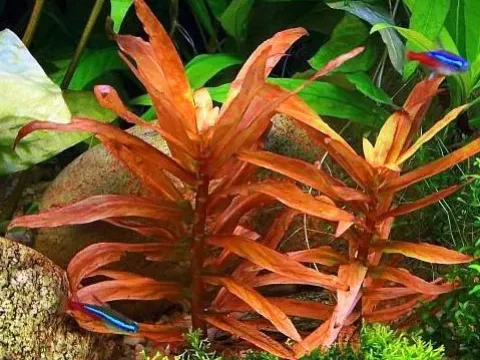
Ammannia articulata
Ammannia articulata
Ammannia articulata is a herbaceous annual plant belonging to the Lythraceae family. It is widely distributed across tropical and subtropical regions of the world, primarily in Africa, Asia, and northern Australia, where it thrives in aquatic and marshy environments.
What the section contains
Ammannia articulata
The plant is classified as a helophyte, meaning it is adapted to growing in wetlands or saturated soil conditions. In agricultural settings, it is often associated with the rice paddy ecosystem, where it occupies the edges of flooded fields and irrigation canals.
Morphologically, the plant features a distinct jointed stem structure, which is the source of its specific epithet. Its leaves are opposite, sessile, and lanceolate, creating a compact canopy that is highly efficient at capturing sunlight in open, waterlogged habitats.
The climate requirements for this species are strictly tropical. It demands high ambient temperatures ranging from 25°C to 30°C and constant solar exposure to maintain its vigorous growth rate and to successfully proceed through its reproductive cycle.
Soil requirements focus on high nutrient availability and water retention. The ideal substrate is a clay-rich or silty soil that allows the roots to stay hydrated while providing the necessary minerals for the plant to reach its full height and produce dense foliage.