
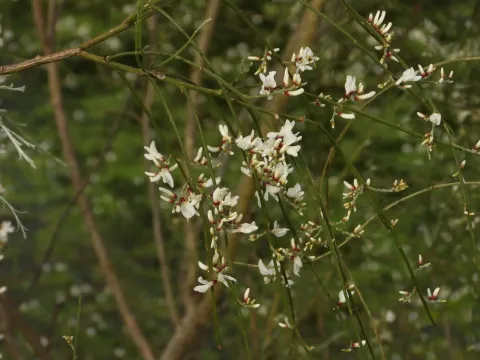
Lygos
Lygos
Sowing Lygos typically occurs in early spring, once the soil temperature is sufficient to support consistent germination and root development.
What the section contains
Lygos
The seeds should be sown at a shallow depth of 2–4 cm, ensuring that there is enough moisture contact for the seeds while still allowing for a swift emergence of the seedling.
Row spacing is determined by the specific use case, whether the crop is intended for biomass production or seed multiplication, with closer spacing favored for forage.
Seed treatment with nitrogen-fixing inoculants is highly recommended to enhance plant vigor and improve nutrient uptake efficiency from the early stages.
A high-quality seed bed preparation, including light harrowing, helps to create the perfect soil structure for the rapid establishment of this crop.
Lygos is a member of the legume family, renowned for its exceptional tolerance to arid conditions and poor soil quality, making it a valuable asset in drylands.
The crop thrives in well-drained sandy or loamy soils and is highly sensitive to waterlogging, which can compromise its root health and overall development.
As a light-demanding species, Lygos requires full sun exposure to optimize its photosynthetic activity and achieve maximum biomass accumulation.
It exhibits remarkable adaptability to different soil pH levels and is capable of managing salinity, which often limits the growth of other agricultural crops.
The ideal temperature range for active growth falls between 20°C and 30°C, though the plant is resilient enough to endure significant diurnal temperature fluctuations.
The yield potential of Lygos is largely dependent on the moisture availability during the critical reproductive phases, particularly during flowering and pod development.
Under irrigation, biomass yields can be substantially increased, positioning Lygos as a reliable forage crop for arid regions where water management is prioritized.
Seed yields are influenced by pollinator activity, as the presence of bees and other insects during the flowering season is essential for high fertilization rates.
Steady yield performance, even in years with sub-optimal rainfall, makes Lygos a preferred choice for farmers operating in unpredictable climatic conditions.
Advanced selection and breeding efforts are currently focused on increasing the seed count per pod and improving the overall stability of annual harvests.
Root rots represent the primary pathological threat, typically induced by poorly drained soil or excessive moisture accumulation during the vegetative stage.
Common legume pests, including various types of weevils and aphids, may affect the crop throughout its life cycle, requiring periodic scouting and monitoring.
Weed competition can hinder growth during the early establishment phase; therefore, mechanical cultivation between rows is considered a best practice.
Implementing a proper crop rotation sequence is essential to break the life cycle of soil-borne pathogens and ensure long-term soil health.
Integrated pest management strategies should focus on biological control agents to keep pest populations below the economic injury level effectively.
Harvesting for seed should be timed carefully once the pods are fully dry and mature to prevent shattering and subsequent losses in the field.
For biomass production, the crop should be mowed at the peak of the flowering stage, ensuring high nutrient density and optimal forage quality.
After harvesting, the seeds must be thoroughly cleaned to remove foreign matter and dried to a stable moisture content to prevent fungal infections during storage.
Modern harvesting machinery must be calibrated to handle the specific seed size of Lygos to minimize mechanical damage and loss of yield.
Storing the harvested material in cool, dry conditions with adequate ventilation is crucial for maintaining the viability of the seeds for future seasons.