
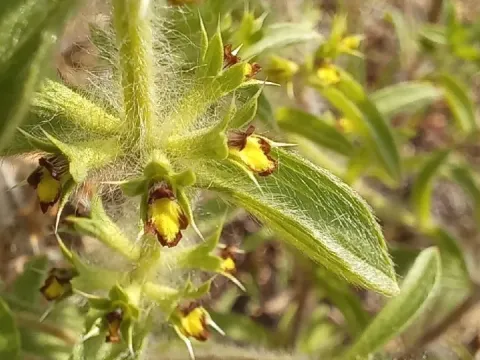
Sideritis montana
Sideritis montana
Sideritis montana is an annual herb that requires spring sowing as soon as soil temperatures reach a stable 10-12 degrees Celsius to ensure proper germination.
What the section contains
Sideritis montana
The optimal planting window typically falls in late April or early May, allowing the seeds to take full advantage of moisture levels present in the soil after winter.
Seeds should be sown at a shallow depth of approximately 1 to 2 centimeters, ensuring they are placed in firm, well-prepared soil to maintain good contact for water absorption.
Row spacing is generally maintained at 30 to 45 centimeters to allow for mechanical weeding and to promote proper aeration of the developing plant canopy.
Proper seedling establishment is crucial, and thin stands should be managed early to avoid overcrowding, which can lead to weakened plants and increased disease risk.
Belonging to the Lamiaceae family, this crop is a xerophyte, meaning it is highly adapted to arid environments and requires plenty of direct sunlight to thrive.
Ideal soil conditions include light, well-draining textures such as sandy or loamy soils, preferably with a neutral to alkaline pH level for maximum nutrient uptake.
The plant is extremely sensitive to waterlogging; therefore, choosing a site with excellent natural drainage is paramount to preventing root rot and other moisture-related issues.
Sideritis montana is naturally suited to dry, mountain-like climates and exhibits strong resilience against temperature fluctuations throughout the growing season.
Avoiding nitrogen-rich fertilizers is recommended, as this plant performs better in nutrient-poor soils, which helps concentrate its secondary metabolites effectively.
The total harvest yield of Sideritis montana depends largely on plant density, sunlight exposure, and the mitigation of weed competition during the early growth stages.
Farmers can expect a dry matter yield ranging from 1.5 to 3 tons per hectare, depending on local environmental conditions and the intensity of crop management practices.
Harvest timing is critical; yield should be assessed based on the concentration of bioactive compounds, which peak during the early stages of full bloom.
While the plant is generally low-maintenance, supplemental irrigation during extreme drought periods can slightly boost biomass production without compromising the essential oil quality.
Economic profitability is driven by the market demand for mountain tea, which is highly valued for its natural antioxidant properties and traditional medicinal uses.
The most significant threats to the crop involve fungal infections such as powdery mildew and root rot, which are often triggered by improper moisture management.
Pests like aphids and spider mites can occasionally affect the foliage, necessitating regular field monitoring and the use of integrated pest management strategies.
Weed control is the most demanding task during the first weeks of growth, as the young seedlings are not strong enough to compete with fast-growing invasive weeds.
Maintaining a strict crop rotation cycle is necessary to avoid the buildup of soil-borne pathogens that commonly affect members of the Lamiaceae family.
Integrated field hygiene, including the removal of infected debris after harvest, plays a vital role in preventing the overwintering of pests and disease spores.
Harvesting should occur when the plants are in full bloom to ensure the highest quality of the harvested aerial parts, which contain the desired chemical compounds.
Once harvested, the plant material must be dried immediately in a shaded, well-ventilated area to prevent fermentation and the loss of delicate essential oils.
Drying temperatures should be strictly controlled, ideally remaining below 40 degrees Celsius, to maintain the color and medicinal efficacy of the dried herb.
After the material has reached the desired moisture content, it is processed, cleaned of impurities, and stored in light-proof containers to protect its quality.
Professional storage practices involving controlled humidity and cool temperatures ensure that the final product remains viable for pharmaceutical or beverage use.