
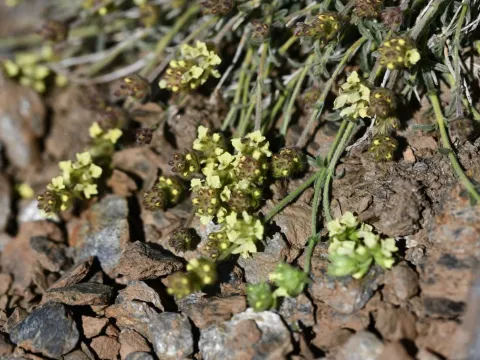
Sideritis glacialis
Sideritis glacialis
Sideritis glacialis is a perennial herbaceous plant belonging to the Lamiaceae family. It is native to high-altitude mountain regions, where it has evolved to thrive in harsh, rocky environments with limited soil nutrition.
What the section contains
Sideritis glacialis
The plant requires well-drained, limestone-based soils to perform optimally. It is highly resistant to drought, as its biological structure is perfectly suited to minimize water loss under intense sun exposure and strong mountain winds.
Cultivation of this species demands full sun and excellent air circulation. In agricultural settings, it is crucial to avoid low-lying areas where water might accumulate, as the root system is highly sensitive to waterlogging and subsequent fungal attacks.
Botanically, the plant is characterized by its dense pubescence (fine hairs), which provides both thermal regulation and protection against high UV radiation. Its growth habit is typically compact, allowing it to withstand extreme temperature fluctuations.
Economically, Sideritis glacialis is highly valued for its secondary metabolites. It is primarily harvested for the production of herbal infusions and essential oils known for their anti-inflammatory and potent antioxidant properties.
The most significant threat to Sideritis glacialis in cultivation is root rot caused by stagnant water or excessively wet growing conditions. Proper site selection and drainage systems are critical to preventing rapid crop loss.
Pest pressure is generally low, but certain leaf-eating beetles can cause damage during the active vegetative stage. Maintaining plant vigor through optimal spacing and ventilation is the best strategy for integrated pest management.
Weed competition is a critical issue during the early establishment phase of the crop. Because the plant grows relatively slowly, manual weeding or careful mechanical cultivation is necessary to prevent weed species from crowding out the plants.
Nutrient imbalance, particularly a lack of essential micronutrients in the soil, can lead to chlorosis and reduced essential oil production. Regular soil testing helps maintain the necessary pH levels for nutrient bioavailability.
In extreme climates, severe frosts combined with lack of snow cover can lead to tissue damage in young plants. While the species is alpine-hardy, early season protection can significantly improve survival rates and subsequent yields.