
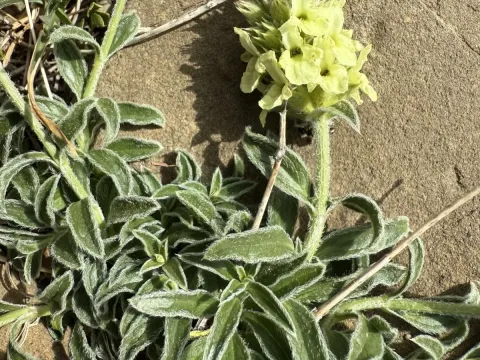
Sideritis hyssopifolia
Sideritis hyssopifolia
Sowing Sideritis hyssopifolia should take place in early spring once the soil temperature consistently reaches 10-12 degrees Celsius. The seeds benefit from cold stratification to break dormancy and ensure uniform emergence in the field.
What the section contains
Sideritis hyssopifolia
For large-scale cultivation, rows should be spaced 45-60 centimeters apart to provide sufficient airflow and allow for mechanical weed control. Precise placement is essential for establishing a healthy, vigorous crop stand.
Seeds should be covered with 1-2 centimeters of soil. Because they are tiny, maintaining consistent surface moisture during the first few weeks after planting is critical for successful germination and initial seedling development.
Starting plants in nursery trays and transplanting seedlings in the 3-4 leaf stage is a viable strategy in colder regions. This method significantly reduces the time required for the plants to establish themselves in the open field.
A plant density of approximately 150,000 to 200,000 plants per hectare is recommended to maximize biomass yield while allowing each individual plant enough space to produce high-quality aromatic compounds.
Sideritis hyssopifolia, a member of the Lamiaceae family, originates from the rocky mountain regions of Southern Europe. It thrives best in full sun and requires high light intensity to develop its medicinal properties.
The ideal soil conditions are rocky, calcareous, and exceptionally well-drained. The species is highly susceptible to root rot if grown in heavy, waterlogged soils, making drainage the most critical factor in site selection.
This crop is remarkably drought-tolerant once established, thanks to its deep taproot system. It is well-adapted to surviving on nutrient-poor, stony soils where many other traditional agricultural crops would fail.
Growth is optimal within a temperature range of 18-25 degrees Celsius. The plant is hardy and exhibits excellent cold tolerance, allowing it to survive harsh winter conditions if protected by snow cover.
For the best results, the soil pH should be neutral to slightly alkaline. Acidic conditions can stunt growth and negatively affect the concentration of essential oils and beneficial flavonoids in the plant tissue.
Under optimal management practices, Sideritis hyssopifolia can produce between 1.5 and 3 tons of dried herb per hectare annually. Yield potential stabilizes from the second year as the root system matures.
Peak biomass is usually achieved from the third year onward. Proper irrigation management during the vegetative phase and adequate solar exposure are the primary drivers of final harvest weight.
The accumulation of beneficial secondary metabolites, such as diterpenoids and phenolics, is maximized when the plant receives intense sunlight, making site selection a crucial aspect of yield quality.
Balanced fertilization, particularly with potassium and phosphorus, supports plant longevity. Well-maintained plantations can remain productive for up to 7 years before replanting is necessary.
Harvesting at the correct phenological stage — specifically during full bloom — is essential to capturing the highest possible yield of the plant’s active medicinal ingredients.
Fungal pathogens represent the most significant threat to the crop, particularly in damp or poorly ventilated fields. Root and crown rot are common if water management is not strictly controlled.
Powdery mildew can affect the foliage during humid periods, reducing the plant's photosynthetic capacity. Preventive measures include maintaining appropriate plant spacing to ensure optimal air circulation.
Insect pests are generally not a major concern, but fields should be monitored regularly for signs of infestation. Integrated Pest Management (IPM) is encouraged to maintain organic-compatible quality.
Weed management is critical during the first year of growth. Mechanical cultivation of rows is preferred, as Sideritis is highly sensitive to competition from aggressive, fast-growing invasive weeds.
Avoiding excess nitrogen application is a key strategy, as it leads to succulent, weak tissue that is much more susceptible to diseases and pest colonization than robust, naturally grown plants.
Harvesting should occur during the full flowering phase. Stems are cut 5-10 centimeters above the ground, allowing for regrowth and protecting the root crown for future production cycles.
Operations are ideally performed on dry, sunny mornings after dew has evaporated. This practice minimizes moisture content, which is vital for preventing degradation of the aromatic oils during the drying phase.
The harvested material must be transported to drying facilities immediately. Stacking fresh, green material for too long causes internal heating, which destroys the delicate chemical profile of the herb.
Drying should be carried out in shaded, well-ventilated areas at temperatures not exceeding 40 degrees Celsius. This preserves the plant's natural color and ensures the stability of its chemical compounds.
Post-harvest processing involves final sorting, cleaning to remove any debris, and packaging into breathable materials for storage or shipping to pharmaceutical and herbal market outlets.