
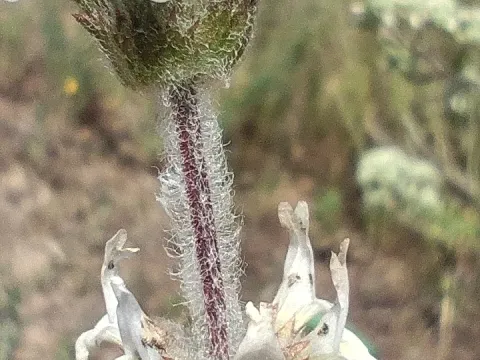
Sideritis hirsuta
Sideritis hirsuta
Sideritis hirsuta, commonly known as mountain tea or ironwort, is typically sown in early spring, specifically between March and April. To maximize germination rates, it is highly recommended to perform a cold stratification of the seeds prior to planting.
What the section contains
Sideritis hirsuta
In commercial cultivation, seeds are sown in nursery beds or greenhouses to allow for precise control over germination conditions. This environment protects the delicate seedlings from unpredictable spring frosts and provides them with a stable start.
Seedlings are pricked out into individual containers once they reach the two-leaf stage. This stage is crucial for establishing a robust root system before the plants are transferred to their permanent outdoor location.
Transplanting into the field usually takes place in May, once the soil has warmed sufficiently. A planting distance of 30x40 centimeters is ideal, as it ensures proper airflow around the plants and reduces the risk of humidity-related issues.
Direct seeding in the open field is possible in regions with mild climates. In these cases, seeds should be sown shallowly, about 0.5 to 1 centimeter deep, and kept moist until the roots have firmly anchored in the soil.
Sideritis hirsuta belongs to the Lamiaceae family and is native to rocky, mountainous Mediterranean regions. It thrives in well-drained, stony soils that have a neutral to slightly alkaline pH level, mimicking its natural habitat.
The plant is highly sun-loving and drought-tolerant. Therefore, it requires open sites with full exposure to sunlight. Excessive soil moisture or waterlogging is strictly avoided as it leads to root rot and plant mortality.
Soil fertility is not a primary concern, as the plant has evolved to grow in nutrient-poor environments. Over-fertilization can actually be counterproductive, leading to overly succulent growth that is more susceptible to disease.
Agricultural maintenance involves regular weeding and light hoeing between rows to ensure good aeration. Fertilization should be kept at a minimum, focusing on potassium and phosphorus to enhance the plant's natural structural integrity.
The botanical feature of dense trichomes (hairs) on the leaves and stems serves as an adaptation to reduce transpiration. This makes the plant exceptionally resilient against harsh mountain climates and low-water availability.
The economic value of Sideritis hirsuta is based on the harvest of its aerial parts, which contain essential oils and various antioxidants. Maximum biomass yields are typically achieved during the second and third years after planting.
For high-quality medicinal or culinary output, the harvest must occur during the peak flowering stage. This is when the concentration of beneficial secondary metabolites, including essential oils, reaches its biological maximum.
Average dry biomass yields vary depending on site conditions and plant density, typically ranging from 1 to 2 tonnes per hectare. Regular pruning after the harvest season encourages new growth for the following year.
Product quality depends heavily on the drying process, which must occur in a shaded, well-ventilated area. Improper drying techniques, such as exposure to direct heat or moisture, can rapidly degrade the volatile oils responsible for the plant's value.
The final product is widely used in the pharmaceutical industry and as a traditional herbal tea. Ensuring the product is free from foreign matter and debris is essential for maintaining a high market price.
The primary threats to Sideritis hirsuta are fungal infections caused by high humidity or poor soil drainage. Pathogens thrive when water pools around the base of the stem, often leading to crown rot or damping-off.
Pests such as aphids and spider mites can occasionally affect the plant, particularly in sheltered or poorly ventilated growing environments. These pests suck the sap from tender leaves, weakening the plant's natural defenses.
Preventive measures include maintaining proper plant spacing and ensuring that weeds do not provide a reservoir for pests or pathogens. Chemical controls are rarely used, as they can compromise the organic certification and quality of the medicinal material.
In cases of mild pest outbreaks, biological control agents or soft soap solutions are often sufficient. The plant's natural essential oils provide it with a high degree of innate resistance, making it a robust candidate for organic farming.
Monitoring the moisture levels around the foliage is critical during rainy periods. If powdery mildew appears, immediate thinning of the foliage to improve air circulation is the most effective management strategy.
Harvesting Sideritis hirsuta is a precision task usually performed during a sunny, dry day to ensure low moisture content in the plant material. The timing should align with the peak blooming period for the best quality.
Only the top flowering stems are harvested, leaving enough of the plant base to allow for rapid regeneration. Precision cutting tools are used to ensure clean wounds that heal quickly without causing structural damage to the crown.
After cutting, the biomass must be transported quickly to the drying facility to prevent fermentation. Freshly harvested Sideritis can heat up rapidly in dense piles, which destroys the aromatic compounds required for commercial use.
The material is spread in thin layers on racks within a shaded drying shed. Constant air circulation is maintained to ensure an even and gentle drying process, preserving the plant's natural color and therapeutic properties.
Once completely dried, the stems are bundled or milled depending on the end-use requirement. Proper storage in cool, dark, and dry conditions ensures the longevity of the active medicinal compounds.