
Lanceolate willow
Salix lanceolata
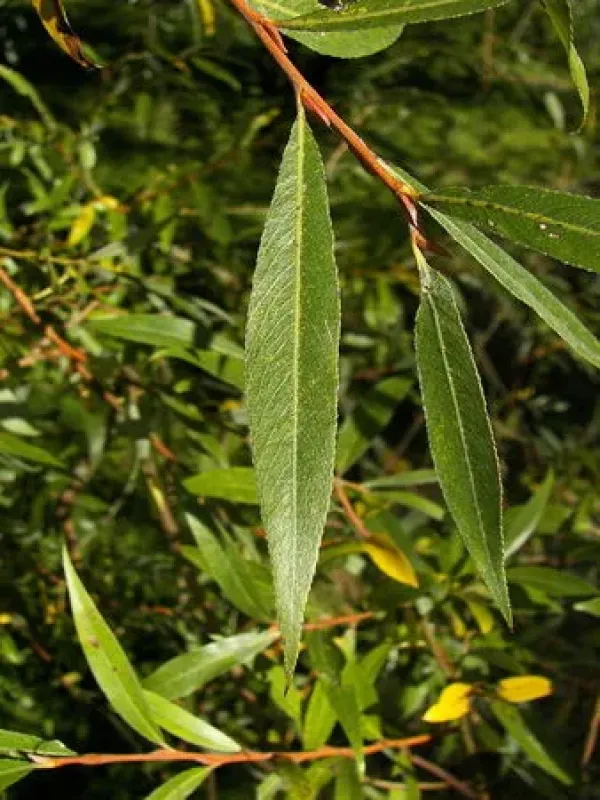
Description
Sowing dates
Propagation of Salix lanceolata is primarily achieved through cuttings. The most effective time to prepare these cuttings is during the dormant season, specifically late winter or very early spring, before the buds begin to break.
Cuttings should be planted in well-prepared soil as soon as the ground is workable in the spring. Ensuring the soil temperature is above 5 degrees Celsius promotes faster root development, which is crucial for early establishment.
For industrial plantations, cuttings are spaced in rows, typically with 1 to 1.5 meters between rows to facilitate mechanical management. Dense planting is often used when the goal is to produce high volumes of biomass.
The cuttings should be inserted into the ground to a depth of approximately 20-25 centimeters, leaving one or two active buds exposed above the surface. This technique encourages a deep and strong root system.
Initial irrigation is essential immediately after planting to ensure good contact between the cutting and the soil. Keeping the soil consistently moist throughout the first few months is vital for preventing seedling loss.
Growing requirements
Belonging to the Salicaceae family, the lanceolate willow is highly adaptable but thrives in moist environments. It is well-suited for riparian zones or areas where groundwater remains relatively close to the surface.
The plant prefers fertile, loamy soils that can retain adequate moisture. While it is quite hardy, it may struggle in excessively dry, sandy soils unless supplemented with regular irrigation during the growing season.
Full sun exposure is a primary requirement for Salix lanceolata. Shade from buildings or larger trees can result in stunted growth and brittle shoots, reducing the overall quality of the harvested wood.
The climate requirements include moderate temperatures and regular rainfall. This species exhibits good frost tolerance, making it suitable for a wide range of temperate regions across the northern hemisphere.
Aggressive weed control is necessary during the first year of establishment. Once the canopy of the willow closes, it will naturally suppress most weeds, but initial manual or mechanical cultivation is mandatory.
Yield
The yield of lanceolate willow depends heavily on planting density, soil fertility, and management intensity. Under optimal conditions, this species can produce a significant amount of biomass annually.
Typical yields can range from 12 to 20 tons per hectare in dry weight, depending on the management intensity. Regular nitrogen applications can boost yields, though over-fertilization should be avoided to maintain wood quality.
Because the plant grows rapidly, harvesting can take place every 1-2 years. This rapid cycle makes Salix lanceolata an attractive candidate for renewable energy biomass production and traditional basketry.
Selection and breeding efforts focus on increasing the uniformity of the rods and improving natural resistance to stressors. High-quality genetic material can significantly improve the output of a plantation.
Proper rejuvenation of the plantation by cutting back old stems to the ground level ensures long-term viability. A well-managed plantation can remain productive for up to 20 years before replanting is required.
Main diseases and pests
Fungal diseases, such as leaf rust and various leaf spot pathogens, are common threats. These diseases can impair photosynthesis and reduce the vigor of the willow, particularly in wet and humid summers.
Insect pests, including willow leaf beetles and aphids, can cause severe defoliation. Integrated pest management strategies, involving both biological control and limited chemical intervention, are recommended.
Rodent damage is a specific risk during winter when food sources are scarce. Protecting young bark from voles and mice is essential in areas with high rodent populations to prevent the death of young plants.
Poor drainage can lead to root rot if the soil remains waterlogged for extended periods. Ensuring good drainage is a critical prophylactic measure against many soil-borne diseases that affect the Salicaceae family.
Regular inspection of the plantation is vital for identifying outbreaks early. If diseased material is identified, it should be removed and destroyed immediately to prevent the spread of pathogens.
Harvesting
The harvest occurs in late autumn or winter when the plants are dormant. Harvesting at this time ensures the highest quality of the rods, as the wood is tougher and the bark is more stable.
Both manual and mechanical harvesting methods are employed. For small-scale basketry production, manual harvesting is preferred, whereas industrial biomass plantations utilize specialized harvesting machinery.
After harvesting, the willow rods are bundled and stored in a well-ventilated, dry area. Proper air circulation is necessary to prevent mold growth and ensure the wood dries without losing its physical properties.
The stumps left after harvest should be cleaned of debris to encourage vigorous regrowth the following spring. Leaving damaged stumps may provide entry points for pathogens and pests.
Quality control during storage is the final step in the harvest process. Checking for moisture content and physical integrity helps ensure that the final product meets market standards for either craft or energy use.