
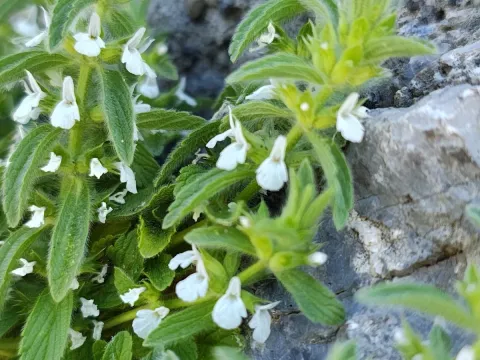
Sideritis romana
Sideritis romana
Sideritis romana, commonly known as a type of mountain tea, is an annual or short-lived perennial herb belonging to the Lamiaceae family.
What the section contains
Sideritis romana
The optimal sowing time for Sideritis romana is during the autumn or early spring, allowing seeds to benefit from natural stratification for improved germination.
Seeds should be sown at a very shallow depth, as they require light to germinate effectively and are susceptible to being buried too deeply.
It is recommended to maintain a spacing of 20 to 30 centimeters between plants, which promotes optimal air circulation and minimizes disease pressure within the field.
Preparation of the seedbed must ensure a fine, crumbly soil structure to support the development of small seedlings during the initial establishment phase.
This crop thrives in Mediterranean-type climates, requiring high levels of solar radiation to produce the essential secondary metabolites for which it is valued.
It demands well-drained, porous soils, ideally with a limestone or rocky base, to prevent any accumulation of water around the root system.
Sideritis romana is highly drought-tolerant, but supplemental irrigation may be necessary during prolonged dry spells to ensure consistent biomass production.
The plant performs best in a temperature range of 20°C to 28°C and is quite sensitive to excessive humidity, which can lead to rapid physiological decline.
Fertilization should be limited; excessive nitrogen levels are discouraged as they stimulate vegetative growth at the expense of floral development and oil quality.
Commercial yields of Sideritis romana are variable, typically ranging between 1.5 to 2.5 tons of dried flowering tops per hectare depending on growing conditions.
The highest productivity is usually observed in the second year of cultivation, provided the plants have established a deep and robust root system.
Yield management involves careful weed control, especially during the early stages of development, as the crop lacks competitive ability against vigorous weeds.
Regular monitoring of floral development stages is essential to ensure harvesting occurs when the biomass quality is at its peak for pharmaceutical use.
Advanced agricultural practices, including micro-drip irrigation, can stabilize yields and increase the percentage of top-grade floral material collected during harvest.
Fungal diseases, specifically root rot and powdery mildew, represent the primary threats, particularly in regions with high humidity or poor soil drainage.
Insects like aphids and mites can be problematic in crowded stands, necessitating integrated pest management strategies to protect the crop's integrity.
Soil-borne pathogens can be mitigated by ensuring a proper crop rotation cycle, avoiding the planting of Lamiaceae species in consecutive seasons on the same site.
Mechanical damage during weeding can create entry points for pathogens, emphasizing the need for precision cultivation tools in larger commercial plots.
Maintaining proper plant density and ensuring a dry microclimate around the foliage are the most effective preventative measures against typical plant diseases.
Harvesting should be conducted at the stage of full bloom when the concentration of essential oils and antioxidant compounds is at its maximum level.
The stalks are typically harvested by cutting them just above the lower leaves to allow for potential secondary regrowth or to maintain plant vitality.
Immediately after harvest, the material should be transported to a drying facility to protect it from heat, direct sun, and moisture degradation.
Controlled air drying at temperatures below 40°C is standard practice to preserve the delicate aroma and medicinal compounds present in the flowering tops.
Final processing involves sifting and removing any non-floral debris, followed by packaging in moisture-proof containers to ensure shelf stability for export.