
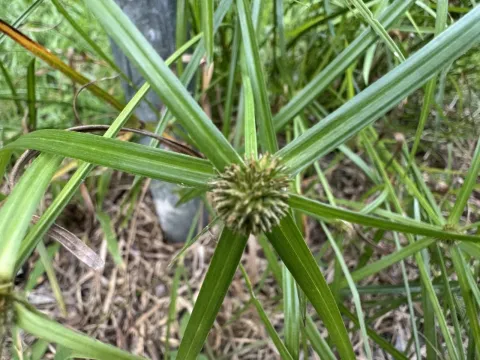
Kyllinga polyphylla
Kyllinga polyphylla
Kyllinga polyphylla is a perennial herbaceous plant belonging to the Cyperaceae family, widely recognized for its robust rhizomatous growth habit.
What the section contains
Kyllinga polyphylla
Sowing or planting of vegetative fragments is best performed when soil temperatures remain consistently above 15 degrees Celsius to encourage rapid establishment.
The plant demonstrates significant vigor in tropical and subtropical climates, where it quickly occupies available soil niches through its creeping root system.
Surface sowing requires adequate moisture, as the seeds and new shoots rely on continuous contact with damp substrate to initiate successful growth.
When establishing a new stand, proper spacing is essential to ensure that the plants have enough resources to develop strong root networks before competition increases.
This crop thrives in warm environments with high humidity and consistent rainfall, as it is physiologically adapted to moisture-rich conditions.
Soil quality is paramount, and the plant prefers fertile, well-draining soils that are rich in organic matter to support its rapid biomass accumulation.
While tolerant of various soil types, it performs best in slightly acidic soils, reflecting its evolutionary origin in tropical landscapes.
Full sunlight is preferred for optimal biomass production, although the plant displays a moderate tolerance to partial shade in certain conditions.
Effective management requires controlled irrigation to prevent soil moisture depletion, as the plant lacks drought-resistant mechanisms found in arid-zone grasses.
Kyllinga polyphylla is primarily utilized for its forage potential, providing a reliable source of green biomass for livestock in suitable warm climates.
The yield is heavily influenced by nitrogen availability, which promotes rapid leaf growth and high density of stems within the pasture.
Nutritional value is highest during the vegetative growth phase; therefore, managing the harvest cycle is critical for maximizing feed quality.
Under intensive management, multiple cuts can be harvested per season, contributing to a stable and consistent supply of fodder.
Yield monitoring involves measuring total dry matter production, which reflects the overall health and reproductive success of the established stand.
The plant exhibits high natural resistance to many common pests, though overly moist conditions may occasionally invite fungal pathogens.
Insects that feed on soft plant tissues can impact yield, necessitating regular monitoring during warm, humid periods when pest populations increase.
Root rot is a potential concern in poorly drained soils where stagnant water creates an environment conducive to harmful microbial activity.
Integrated pest management strategies focusing on drainage and proper density are usually sufficient to mitigate most biological threats.
Chemical intervention is rarely required, maintaining the profile of the crop as a relatively low-input forage species in suitable regions.
Harvesting is typically conducted using standard mechanical mowing equipment designed for forage crops to handle large areas efficiently.
The ideal timing for cutting is just before the plant enters the reproductive stage to ensure the highest nutritional quality of the forage.
Maintaining a specific stubble height is necessary to protect the growing points, allowing for rapid regeneration of the stand after harvesting.
Post-harvest management involves rapid handling of the biomass to ensure proper drying or preservation, preventing spoilage due to high initial moisture.
Long-term field productivity depends on rotational harvesting schedules that balance the need for high output with the plant's recovery capacity.