
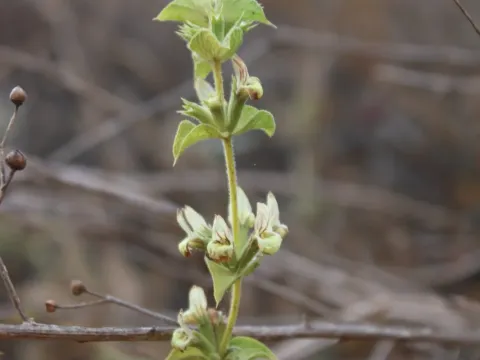
Sideritis pullulans
Sideritis pullulans
Sideritis pullulans, a member of the Lamiaceae family, is a perennial herb valued for its medicinal properties. Propagation is typically achieved through seeds sown in early spring when the soil temperature consistently reaches 10-12°C.
What the section contains
Sideritis pullulans
The seeds are small and possess a dormancy mechanism, so cold stratification for 3-4 weeks is highly recommended to improve the germination rate and ensure uniform seedling emergence.
Seeds should be sown at a shallow depth of 1-2 centimeters in well-prepared, loose soil, ensuring they are not buried too deeply to maintain access to necessary light.
Optimal spacing involves rows 45 to 60 centimeters apart to allow for proper airflow and mechanized or manual weeding between the rows during the early establishment phase.
Vegetative propagation via root division is also a viable option for commercial growers to maintain genetic uniformity, particularly when specific high-yield selections are used.
This species thrives in high-altitude environments, meaning it is exceptionally adapted to bright, direct sunlight and requires an open field exposure to achieve its full potential.
The soil must be well-drained and alkaline, ideally stony or sandy, as Sideritis pullulans is highly sensitive to waterlogging, which often leads to root collar rot.
It displays remarkable drought resistance due to its xerophytic adaptations, making it an excellent candidate for regions with limited irrigation resources.
While the plant is hardy, it benefits from moderate phosphorus and potassium fertilization, which strengthens the plant tissue and improves its resistance to cold winters.
Maintaining a neutral to slightly alkaline soil pH is crucial, as the plant does not perform well in acidic conditions, which can lead to micronutrient deficiencies.
The primary threats to Sideritis pullulans crops are fungal diseases, particularly powdery mildew and root rot caused by stagnant water or high humidity in the canopy.
Insects such as aphids and spider mites can cause significant damage during hot and dry spells, as they feed on the sap and significantly weaken the plant vigor.
Weed management is critical during the first growing season; failure to control competing vegetation can result in stunted growth and drastically reduced yields of high-quality herb.
Integrated pest management should be employed, focusing on maintaining field hygiene and ensuring proper spacing to minimize the spread of airborne spores and pests.
Avoiding over-irrigation is the single most important cultural practice to prevent the majority of pathogen-related issues in this crop.
The harvesting stage is critical and should take place during the peak flowering phase, when the essential oil and polyphenol concentration is at its peak.
Harvesting is performed by cutting the upper aerial parts of the plant, leaving at least 5-10 centimeters of the stem intact to allow the plant to regenerate effectively.
Post-harvest handling requires immediate transfer of the fresh material to drying facilities to prevent oxidation and the degradation of valuable secondary metabolites.
The herb should be dried in a shaded, well-ventilated space with controlled temperatures, ideally not exceeding 40°C to preserve the aromatic and medicinal profile.
Once dried, the final product must be stored in moisture-proof containers in a cool, dark location to extend its shelf life and maintain its market quality.