
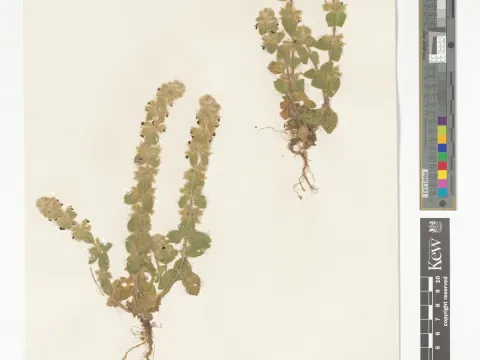
Sideritis remota
Sideritis remota
Sowing of Sideritis remota seeds is typically carried out in the autumn or early spring, once the soil maintains moisture from snowmelt. Late autumn sowing is considered optimal as seeds undergo natural stratification, which improves germination rates significantly.
What the section contains
Sideritis remota
For spring sowing, seeds require pre-treatment, including soaking and brief chilling, to enhance uniformity. Seeds should be sown at a depth of 1–2 centimeters, ensuring they are not buried too deeply to allow the delicate seedlings to emerge properly.
The crop exhibits slow early growth, making weed management essential during the first two months. Thinning should be performed after the development of 3–4 true leaves, ensuring plants are spaced 20–25 centimeters apart for optimal development.
A plant density of approximately 150,000 to 200,000 plants per hectare is ideal to provide adequate space for nutrient absorption. Propagation via nursery trays is also a viable method that optimizes seed usage and ensures a more uniform establishment.
While plant growth regulators may be used in industrial settings to accelerate germination, the species displays high natural adaptability and thrives under standard organic cultivation practices.
Sideritis remota belongs to the Lamiaceae family and is a typical xerophyte adapted to poor, rocky, or calcareous soils. It is highly demanding of intense sunlight, which is necessary to maximize the concentration of essential oils in its tissues.
The plant prefers well-drained sites, as waterlogging in the root zone quickly leads to root rot and mortality. Ideally, soils should be loose, with a neutral or slightly alkaline pH, and rich in calcium content to support healthy growth.
The species exhibits excellent drought tolerance, surviving long periods without rainfall due to its deep taproot system. However, for commercial biomass production in the initial years, moderate irrigation during the active growth phase is recommended.
As a perennial semi-shrub, site selection must account for long-term usage, minimizing the need for frequent soil cultivation. Placing the crop on south-facing slopes helps mitigate frost damage and ensures higher ambient temperatures.
Absence of shading from woody vegetation is crucial, as light deficiency leads to elongated, weak stems and a significant reduction in the secondary metabolites that give the plant its medicinal value.
Yields of Sideritis remota depend heavily on the age of the plantation and the climatic conditions of the cultivation region. Peak biomass productivity is typically observed during the second and third years after establishment on a permanent site.
Average yields of dry aerial biomass range from 1.5 to 3 tonnes per hectare under well-managed conditions. The quality of the final product is determined by the specific concentration of flavonoids and terpenoids within the dried stems and flowers.
Economic applications include the production of herbal teas, pharmaceutical use in anti-inflammatory drugs, and the cosmetic industry. High market demand for sustainably grown herbal products makes this a profitable specialty crop.
Fertilization should be kept to a minimum; an excess of nitrogen encourages excessive vegetative growth at the expense of oil quality and medicinal component concentrations in the leaves and flowering spikes.
Appropriate drying methods, involving shaded areas with high ventilation, are essential to maintain the visual quality and chemical integrity of the crop, directly influencing its market price.
The primary threats to Sideritis remota are fungal diseases that arise from improper water management. Root rot, induced by waterlogged soil conditions, is considered the most significant pathogen that can jeopardize an entire field.
Pests such as spider mites or aphids may attack young plants during dry spells. Preventive treatments with biological control agents are the preferred method, given the sensitive nature of the crop and its medicinal end-use.
Weeds are severe competitors during the first year of growth, as they may outcompete the herb for sunlight and nutrients. Regular weeding and the use of gravel mulch are highly recommended to lower maintenance risks.
Leaf-eating insects are rarely an economic concern, thanks to the presence of specific essential oils that act as natural repellents. Nonetheless, regular monitoring of the crop canopy is necessary to manage outbreaks early.
Strict adherence to crop rotation cycles prevents the buildup of soil-borne pathogens. Planting Sideritis following other Lamiaceae members is discouraged to avoid the transfer of common diseases and pests.
Harvesting of Sideritis remota is performed during the peak flowering stage, when the concentration of bioactive compounds in the flowers and upper stems is at its maximum. This timing is critical to achieving the highest quality standards.
The upper 15–20 centimeters of the stem are harvested using manual or mechanized methods. It is vital to avoid damaging the woody base of the plant to ensure vigorous regrowth for subsequent growing seasons.
Post-harvest, the raw material must undergo immediate processing to prevent overheating and the degradation of aromatic components. Drying in specialized chambers or well-ventilated dark areas at temperatures below 40 degrees is ideal.
Careful sorting after drying ensures the removal of impurities and damaged sections, enhancing the grade and value of the final product. High-quality dry material should retain its natural color and characteristic aroma of mountain tea.
Storage should be conducted in paper bags or airtight containers in cool, dry places protected from direct sunlight to prevent the oxidation of the plant's active components and preserve shelf life.