
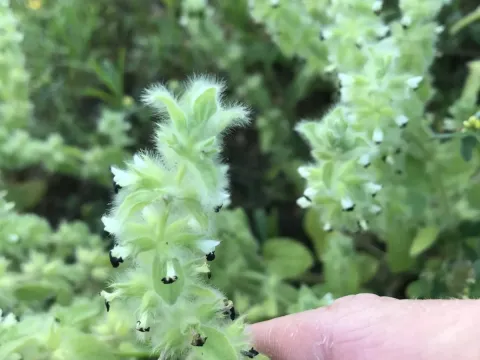
Sideritis lanata
Sideritis lanata
Sideritis lanata, commonly known as woolly ironwort, is a resilient perennial plant belonging to the Lamiaceae family. It is increasingly popular in herbal farming due to its medicinal properties and suitability for cultivation in arid climates.
What the section contains
Sideritis lanata
Seeds should be sown in early spring, once the soil has warmed to at least 10 degrees Celsius. For nursery production, starting in indoor trays during March allows for better control over germination conditions before transplanting.
In field conditions, sow seeds at a shallow depth of no more than 1 centimeter, as light is a critical trigger for germination. Maintain row spacing of 40 to 50 centimeters to ensure adequate airflow and room for mechanical weeding.
The plant requires a fine-textured soil preparation to ensure good seed-to-soil contact. Keeping the seedbed moist during the first 14 to 21 days is essential for uniform emergence, after which the plant becomes highly drought-tolerant.
After thinning, ensure a plant density that prevents overcrowding. Proper spacing is a key factor in reducing the humidity around the crown, which is vital for preventing crown rot during the plant's early developmental stages.
This crop thrives in environments that mimic its natural mountainous or steppe habitat. It requires full sun exposure for at least 6 to 8 hours daily to stimulate the production of its characteristic essential oils and secondary metabolites.
Soil drainage is the most critical factor for successful cultivation. Sideritis lanata performs best in rocky, sandy, or calcareous soils with a neutral to slightly alkaline pH. Avoid waterlogged conditions at all costs, as the roots are prone to decay.
The plant is remarkably hardy and can withstand significant temperature fluctuations, including cold winters. However, it is sensitive to high air humidity combined with low temperatures, which can damage the foliage.
Fertilization should be kept to a minimum. Over-fertilizing with nitrogen promotes excessive leafy growth but significantly reduces the concentration of beneficial diterpenes and flavonoids in the plant tissue.
Regular weeding is necessary during the establishment year to avoid competition. Once the plants are fully mature and established, they are highly competitive and require very little supplemental irrigation or soil intervention.
Yield estimation for Sideritis lanata is based on the dry weight of the aerial parts harvested during the peak flowering stage. On average, well-managed plantations can yield between 1.5 to 2.5 tons of dry biomass per hectare.
The plant reaches its peak productive capacity in its second and third years of life. After the fourth year, individual plants may begin to show signs of senescence, leading to a natural decline in herb quality and quantity.
Regular maintenance, including proper pruning after the flowering phase, encourages vegetative recovery and can extend the commercial viability of a plantation by several seasons.
Timing the harvest is critical; the highest concentration of bioactive compounds is typically present when the plants are in full bloom. Delaying the harvest leads to lignification of stems and loss of volatile components.
Post-harvest processing requires immediate transfer to shaded drying facilities. Rapid cooling and ventilation are necessary to prevent fermentation and discoloration, which would otherwise devalue the final herbal product.
Sideritis lanata has a natural defense mechanism against many common agricultural pests due to its high concentration of secondary metabolites. However, root rot remains the primary threat in fields with inadequate drainage.
Fungal pathogens such as powdery mildew may appear during periods of high humidity or poor air circulation. Improving plant spacing and ensuring that the foliage stays dry are the most effective non-chemical control measures.
Aphids can occasionally infest the tips of young shoots during dry, hot spells. If monitoring reveals a threshold-crossing population, applications of organic insecticidal soaps or biological controls should be implemented.
Preventing the accumulation of soil-borne diseases requires a strict crop rotation schedule. Do not plant Sideritis species in the same field more than once every four years to allow the soil microbiome to recover.
Monitoring the soil moisture levels is the best proactive step against diseases. Using moisture sensors or simple soil testing can help prevent the common mistake of over-irrigating during the dormant or slow-growth periods.
Harvesting is performed by cutting the stems about 5 to 10 centimeters above the ground. This preserves the basal buds, which are necessary for the plant to regenerate growth for the subsequent year's cycle.
Optimal timing for the harvest is during the mid-day period after all traces of dew have evaporated. Harvesting dry material is essential for maintaining high product quality and reducing energy costs during the drying process.
The harvested stems should be bundled or spread thinly on drying racks. It is important to keep the material out of direct sunlight, as UV radiation causes the breakdown of sensitive chemical components and alters the plant's color.
Once dry, the herb is separated from impurities and packaged in breathable, light-proof containers. Proper storage in a cool, dry place ensures the maintenance of the aromatic profile for up to two years.
Quality assurance during the harvest involves constant monitoring for any presence of mold or discoloration. Any affected material should be discarded immediately to avoid contaminating the rest of the batch.