
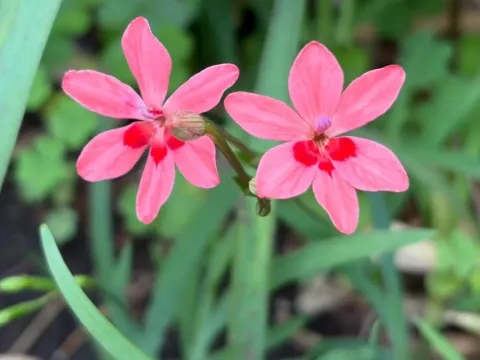
Lapeirousia laxa
Lapeirousia laxa
Lapeirousia laxa, a member of the Iridaceae family, is a delicate bulbous plant that requires careful placement. Seeds should be sown in early spring in well-prepared, sandy soil once the frost risk has completely passed.
What the section contains
Lapeirousia laxa
For container gardening or greenhouse propagation, seeds can be started in late winter. Use a light, sterilized potting mix and keep it consistently moist but not saturated during the germination phase.
Corms should be planted at a depth of approximately 5 to 8 centimeters. Space them about 10 to 15 centimeters apart to allow sufficient foliage development throughout the growing season.
In temperate climates, corms are often lifted in autumn after the foliage has withered. Store them in a cool, dry place packed in peat moss until the following planting season.
Mass planting of Lapeirousia laxa creates an impressive visual effect, making it a popular choice for rock gardens and borders where soil drainage is exceptional.
The primary requirement for this culture is excellent drainage. The soil must be loose and gritty to prevent water from accumulating around the corms, which is essential to avoid physiological stress.
Full sun exposure is ideal for vigorous growth and high-quality flower production. While the plant can tolerate partial shade, its habit becomes lax and the flowering intensity is reduced significantly.
Watering should be managed carefully. During the active growing period, provide moderate moisture. Once the flowering stage concludes and leaves begin to yellow, reduce water significantly to induce dormancy.
Fertilization with a balanced, water-soluble fertilizer can be applied once at the beginning of the growth cycle. Avoid high-nitrogen fertilizers that encourage excessive vegetative growth over floral development.
Temperature management is critical for the plant's health. It thrives in moderate temperatures and requires protection from extreme heat or sudden freezing conditions during its active stage.
Fungal rots, specifically Botrytis and Fusarium, are the most significant threats to the plant. These diseases flourish in stagnant air or excessively damp environments, requiring strict sanitation.
Common pests like aphids and thrips can infest the floral stems. Monitoring is essential, and horticultural soaps or systemic insecticides should be applied at the first sign of pest activity.
Slugs and snails can cause severe damage to young foliage. Implementing barriers like copper tape or using organic baits can help protect the plants during the delicate early stages of growth.
To prevent disease spread, ensure adequate spacing between plants to maximize airflow. Good ventilation is one of the most effective natural defenses against fungal infections in bulbous plants.
Regular inspection of the corms during storage is vital. Any material showing signs of decay or mold must be discarded immediately to preserve the health of the remaining stock.