
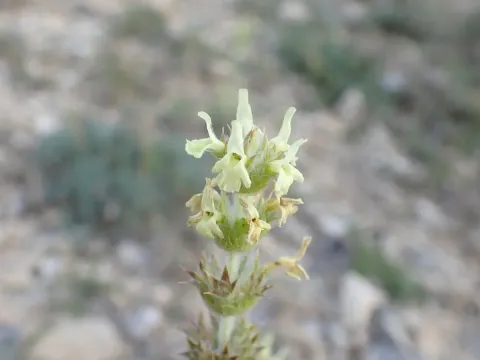
Sideritis fruticulosa
Sideritis fruticulosa
Sowing seeds of Sideritis fruticulosa is best performed in the spring, once the soil has warmed to a temperature of 12–15 degrees Celsius. April is considered the optimal time for sowing, allowing seeds to undergo natural stratification and receive sufficient moisture for uniform germination.
What the section contains
Sideritis fruticulosa
The seeds of this crop have a dense coat, so implementing pre-sowing treatments is advisable to increase germination rates. Soaking seeds in growth stimulants prior to planting significantly reduces the time required for the first shoots to emerge on the soil surface.
The sowing pattern must take into account the plant's habit, as it forms quite voluminous bushes. It is recommended to maintain row spacing between 45 and 60 centimeters to provide plants with enough space for nutrition and proper ventilation of the aerial parts.
When sowing in open ground, the sowing depth should not exceed 1.5–2 centimeters. Planting too deep can lead to seed rot or the loss of growth energy needed to break through the soil layer, making agronomic precision crucial during the seeding process.
After sowing, it is advisable to lightly compact the soil to ensure contact between the seeds and the moist medium, which is critical for crops of arid origin. During the first weeks after sowing, monitor soil moisture carefully to prevent the upper horizon from drying out completely.
Sideritis fruticulosa belongs to the Lamiaceae family and is a typical xerophyte, adapted to life in limited moisture conditions. The crop prefers well-lit, sunny areas that are not subjected to shading throughout the entire duration of the day.
Successful cultivation requires light, sandy, or stony soils with excellent drainage. Water stagnation is detrimental to the plant's root system; therefore, on heavy clay soils, it is mandatory to create raised beds or provide additional drainage systems.
The crop shows high resistance to low temperatures, yet it feels most comfortable in conditions of a moderate Mediterranean or steppe climate. The optimal temperature range for vegetation is between +18 and +28 degrees Celsius.
Soil fertility requirements for Sideritis are moderate. The plant performs well in poor, stony substrates where competition with weeds is minimal. Excessive application of nitrogen fertilizers can lead to a decrease in the concentration of essential oils and flavonoids.
The soil pH level for cultivating this species should be in the range of 6.5 to 7.5. On acidic soils, the plant develops poorly, so preliminary liming of the site is conducted before planting if necessary to adjust the environment.
The yield of Sideritis fruticulosa is determined by the mass of the marketable aerial parts, which are harvested during the active flowering phase. On an industrial scale, the output of dry raw material varies depending on the age of the plantation and the specific climatic features of the growing season.
Maximum productivity indicators are achieved in the second and third year after establishment. The plant is capable of stable fruiting and building vegetative mass for 5–7 years, provided that proper pruning regimes and timely weeding are observed.
Estimated yield of dry raw material ranges from 1.5 to 2.5 tons per hectare, provided that planting density is maintained correctly. It is important to understand that the quality of the raw material directly depends on the preservation of the inflorescences during drying and transportation.
To increase the yield of biologically active substances, regular rejuvenating pruning must be performed. This stimulates the growth of new shoots and prevents excessive lignification of the lower part of the stems, which positively impacts the quality of the final product.
Modern cultivation technologies include the use of drip irrigation during periods of severe drought. This allows not only for an increase in total yield mass but also helps stabilize the content of beneficial components in the plant tissues throughout the season.
Diseases in Sideritis fruticulosa are rare due to its high antiseptic activity and natural adaptation to dry climates. However, when agronomic practices are violated, especially in cases of waterlogging, infections by fungal pathogens such as powdery mildew can occur.
Under conditions of high air humidity and poor ventilation, gray mold may develop in the plantings. To combat this issue, it is recommended to remove affected plant parts and thin out the planting to improve air circulation flow.
Among pests, various types of leaf-eating insects, including caterpillars of certain moths, pose the greatest danger. They can cause damage to the foliage, reducing the overall aesthetic appeal and the market quality of the harvested plant raw material.
In some years, aphid infestations are observed as they feed on the sap of young shoot tips. To protect the crops, it is preferable to use biological agents or eco-friendly insecticides based on plant extracts to avoid compromising the chemical composition of the raw material.
It is also important to control root health to prevent infection by soil nematodes. Prevention consists of proper crop rotation and avoiding the cultivation of this crop on fields previously used for Solanaceae or other species susceptible to these pathogens.
Harvesting Sideritis fruticulosa is performed during the period of mass flowering, when the content of essential oils and active compounds reaches its peak. Typically, this time occurs in mid-to-late summer, depending on the geographic location of the plantation.
Special tools are used for cutting, ensuring the cleanliness and neatness of the cut. The upper part of the shoots, approximately 15–20 centimeters in length, is harvested, including inflorescences and the adjacent leaves, which are the most valuable from a pharmacological perspective.
The drying process must take place in a well-ventilated room protected from direct sunlight or in specialized drying chambers at temperatures not exceeding 40 degrees Celsius. This preserves the natural color and aroma of the raw material.
Storage of the dried product is carried out in airtight containers or paper bags in dry, dark warehouse facilities. It is important to prevent moisture intake, as this leads to the rapid loss of essential oils and the potential development of mold.
After the harvest is complete, the plantation is lightly hoed and cleared of weeds, preparing the plants for the winter dormancy period. Such preparation is the key to successful overwintering and rapid recovery of vegetation in the new season.