
Sideritis candicans
Sideritis candicans
Sideritis candicans, commonly known as a type of ironwort, is a perennial flowering plant belonging to the Lamiaceae family. Native to the Madeira archipelago, it is a hardy species adapted to high-altitude and rocky environments.
What the section contains
Sideritis candicans
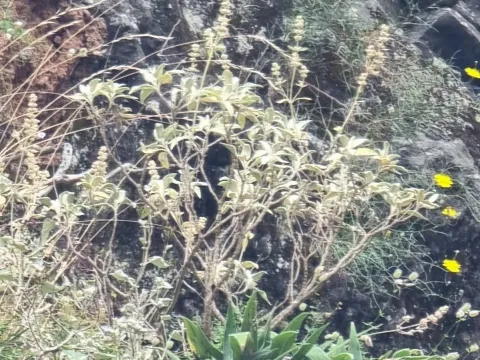
Botanically, the plant is characterized by its silvery-white tomentose leaves, which are an evolutionary adaptation to preserve water and reflect intense UV radiation. It typically grows as a small subshrub with terminal inflorescences of yellowish flowers.
The crop requires sandy or rocky soil with excellent drainage properties to thrive. It is highly intolerant of waterlogged conditions, which can lead to rapid root decay, making soil preparation a critical step in its successful cultivation.
Regarding climate, Sideritis candicans prefers a sunny, Mediterranean-like climate. While it is remarkably drought-tolerant, it requires steady sunlight to produce the essential oils and bioactive compounds for which the genus is commercially valued.
Agricultural management should focus on maintaining low levels of moisture and ensuring sufficient air circulation around the plants. Minimal fertilization is required, as the plant is adapted to nutrient-poor volcanic or rocky substrates typical of its native habitat.
The primary threats to Sideritis candicans cultivation are soil-borne pathogens, specifically fungal root rots caused by over-irrigation or excessive humidity in the growing medium.
Pests such as aphids and spider mites can occasionally affect the plant, particularly in sheltered or greenhouse environments where natural predators are absent.
Management of these threats involves strict irrigation schedules, ensuring that the top layer of soil dries out completely between waterings to prevent the development of opportunistic fungi.
Cultural practices such as wider plant spacing are recommended to enhance airflow, which serves as a natural preventative measure against the spread of fungal spores.
If chemical interventions are necessary, they should be applied sparingly, following sustainable agriculture standards, as the plant is frequently harvested for its medicinal properties.