
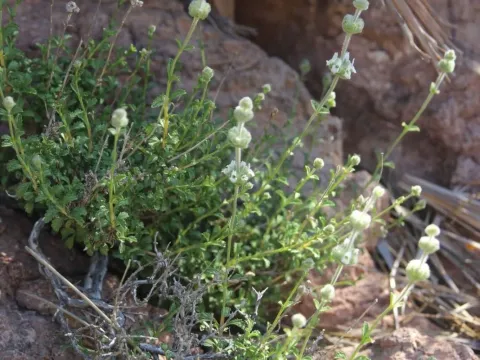
Sideritis
Sideritis L.
Sideritis seeds are typically sown in early spring when soil temperatures reach +10...+12°C. In regions with milder climates, late-autumn sowing is also feasible, which benefits from natural seed stratification and results in more uniform germination.
What the section contains


Sideritis
For plantation establishment, a row-spacing of 45–60 centimeters is considered optimal. Seeds should not be planted deeper than 0.5–1 centimeter, as they are small and highly sensitive to soil crusting and compaction.
Using a seedling propagation method often leads to a more uniform crop stand. Seedlings are transplanted into open fields at the 3–4 true leaf stage, keeping a spacing of approximately 20–25 centimeters between individual plants.
Ensuring adequate contact between seeds and moist soil is crucial at the time of sowing; therefore, light rolling of the soil surface is recommended post-sowing.
The crop can thrive in the same location for 5–7 years, after which plot renewal is necessary due to the natural decline in vigor of the aging root system.
Sideritis belongs to the Lamiaceae family and is a sun-loving crop that requires open, well-lit areas. The plant is extremely sensitive to excessive moisture, and stagnant water can be lethal to its root system.
The plant performs best in poor, rocky, or sandy soils with a neutral or slightly alkaline pH. Heavy, acidic clay soils are generally unsuitable for the commercial cultivation of Sideritis.
It exhibits high drought tolerance and winter hardiness within its native range. It is well-adapted to the sharp day-to-night temperature fluctuations typical of mountainous Mediterranean landscapes.
Mineral nutrition should be managed moderately. Excessive application of nitrogen fertilizers leads to a decrease in the concentration of essential oils and flavonoids, which are the primary targets for commercial harvesting.
Agronomic management requires regular inter-row cultivation to prevent soil crusting and to manage weed competition, especially during the first two years of the crop's life cycle.
The yield of Sideritis aerial biomass depends on the specific species, regional climate, and plant density. On average, commercial productivity ranges from 1.5 to 3 tons of dried mass per hectare.
The highest biomass output is usually observed in the 3rd or 4th year after plantation establishment. Typically, no harvest is taken in the first year of growth as the plant focuses on developing a basal rosette of leaves.
Essential oil content in dried raw material ranges from 0.1% to 0.5%, making economic efficiency directly dependent on the quality of post-harvest drying and storage procedures.
To maximize yields, timely cutting is essential, as it stimulates secondary tillering and the growth of new shoots during the current season, provided that moisture levels remain sufficient.
Profitability is closely linked to the depth of processing—ranging from direct sales of dried floral stems to extraction for the food and pharmaceutical industries.
The primary threats to Sideritis stands include fungal diseases caused by high humidity in the air and soil. Root rots and powdery mildew can significantly reduce plant stand density.
Common pests include aphids and various types of weevils, which may damage tender young shoot tips and flower buds during the active growing season.
Weeds are the major competitors for nutrients and light in the early growth stages. Without proper control, weeds can completely suppress the development of young Sideritis plants.
To manage disease pressure, it is recommended to follow a crop rotation schedule and avoid overcrowded plantings, which ensures better air circulation around the root zone.
Chemical plant protection products should be used sparingly, as Sideritis is predominantly utilized for medicinal purposes and the production of organic herbal teas.
Harvesting is performed during the stage of full flowering, when the concentration of biologically active compounds in the aerial parts of the plant reaches its peak.
Cutting is carried out at a height of 5–10 centimeters from the ground, using specialized mechanical mowers or manual hand tools designed for herbal harvesting.
The harvested material must be transported to the drying facility immediately. It is critical to avoid overheating or rotting of the cut biomass, which leads to rapid loss of essential oils and discoloration.
Drying is conducted in the shade under well-ventilated canopies or in mechanical dryers at temperatures not exceeding +40...+45°C to preserve quality characteristics.
After drying, the product is cleaned of debris and packaged in airtight containers to prevent moisture absorption and the loss of aromatic properties.