
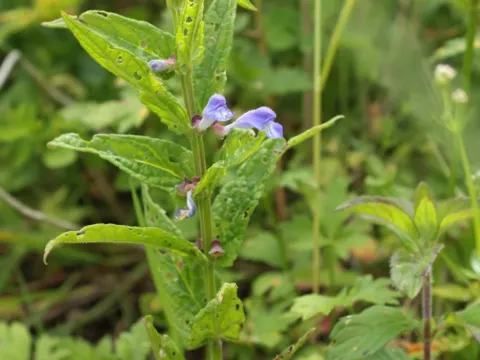
Marsh skullcap
Scutellaria galericulata
Marsh skullcap (Scutellaria galericulata) is a perennial herbaceous plant belonging to the Lamiaceae family. It is native to temperate regions across the Northern Hemisphere, where it thrives in wetlands and moist environments.
What the section contains
Marsh skullcap
The plant is highly moisture-loving, often found naturally growing in marshes, along riverbanks, and in damp meadows. In an agricultural setting, maintaining constant soil moisture is the primary requirement for healthy growth.
Soil requirements involve rich, loamy, or peaty substrates that can retain water effectively. It thrives in soils with neutral to slightly acidic pH levels, making it well-suited for wetlands and reclaimed bog areas.
The species is remarkably winter-hardy, capable of surviving harsh freezing temperatures due to its dormant rhizomes. Its vegetative structure is adapted to seasonal cycles, ensuring perennial persistence in temperate climates.
Economically, this plant is valued for its pharmacological potential. The aerial parts contain bioactive compounds, including scutellarin, which have been historically used in traditional medicine for their sedative properties.
Disease pressure in marsh skullcap is primarily related to high humidity levels. Powdery mildew is the most common fungal issue, appearing as a white fungal mat on leaves when air circulation is poor.
Insect pests include aphids and leaf-eating beetles, which can cause significant damage to the foliage. Integrated pest management strategies should focus on biological control agents to maintain the medicinal quality of the harvest.
The harvest period typically aligns with full flowering, usually between mid-summer and late summer. The top portions of the stems are harvested, ensuring that the roots remain intact to allow for regrowth.
Post-harvest processing involves immediate drying in well-ventilated, shaded areas. Proper drying temperatures are critical to preventing the degradation of volatile oils and medicinal constituents within the plant tissue.