
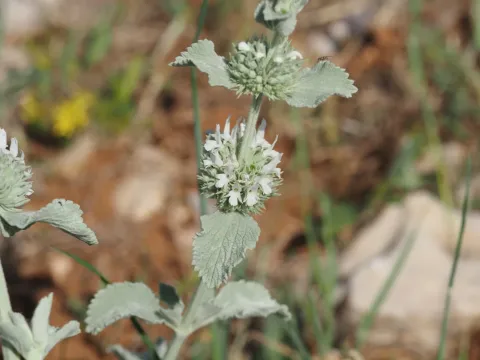
Marrubium incanum
Marrubium incanum
Sowing Marrubium incanum in commercial cultivation is usually carried out in the spring, as soon as the soil warms up to 10–12°C. Autumn sowing is also possible, allowing seeds to undergo natural stratification in the soil.
What the section contains
Marrubium incanum
The sowing depth should not exceed 1–2 centimeters, as the seeds are quite small and require good contact with the moist substrate to germinate.
When sowing in rows, it is recommended to maintain an interval of 40–60 centimeters between rows to ensure high-quality field maintenance.
Seedlings appear within 2–3 weeks after sowing, provided there is sufficient soil moisture. In the first year, the plant forms a rosette of leaves.
To obtain uniform germination, it is recommended to subject the seeds to cold stratification for a month before sowing to break dormancy.
Marrubium incanum belongs to the Lamiaceae family and is a typical xerophyte adapted to growing in conditions of moisture deficit.
The plant does not have strict soil requirements, but it develops best in light, sandy or rocky soils with good drainage and a neutral pH.
The crop demonstrates high winter hardiness and drought tolerance, making it suitable for cultivation in steppe and arid regions.
Optimal growth conditions include long daylight hours and a moderately warm climate without excessive moisture stagnation in the root zone.
Excessive organic fertilization can reduce the concentration of bioactive compounds, so nitrogen applications should be kept to a minimum.
Marrubium incanum has high resistance to many common plant diseases, although excessive humidity can lead to powdery mildew or root rot.
Among pests, leaf-eating insects, including certain types of lepidopteran larvae that feed on Lamiaceae leaves, pose the greatest threat.
To prevent the spread of fungal diseases, it is critical to maintain good airflow and avoid overcrowding the planting beds.
Aphids may infest apical shoots during hot periods, which leads to the deformation of young leaves and a decrease in product quality.
Weed control during the early stages of vegetation is the primary agronomic task, as the plant grows slowly during its first year.
The main harvest of the aerial part of the plant is carried out during the mass flowering phase, when the concentration of essential oils and flavonoids is at its peak.
Harvesting is performed by cutting the flowering shoots at a height of 10–15 centimeters from the ground to stimulate regrowth.
Drying of the raw material is carried out in well-ventilated areas or specialized dryers at temperatures not exceeding 40°C to preserve medicinal properties.
After drying, the material is threshed to separate the leaves and flowers from the coarse stems, which improves the final quality of the batch.
Properly dried raw material has a gray-green color and a specific bitter aroma, meeting the biological standards for pharmaceutical use.