
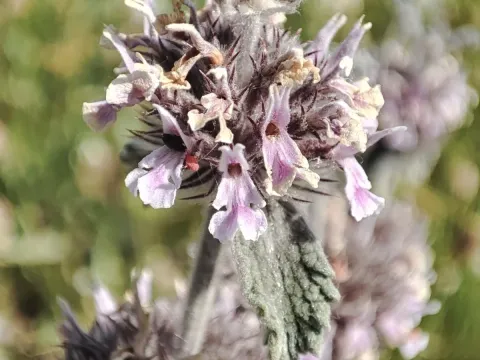
Marrubium supinum
Marrubium supinum
Marrubium supinum, a perennial member of the Lamiaceae family, is propagated primarily through seeds. Sowing is best performed in early spring when the soil temperature consistently reaches 10–12°C.
What the section contains
Marrubium supinum
Given the small size of the seeds, they should be sown shallowly, ideally at a depth of 0.5 to 1 cm. Proper soil contact is essential for uniform germination across the field.
Planting in rows spaced 45–60 cm apart is recommended to ensure adequate air circulation and to facilitate weed control efforts between rows. This spacing prevents overcrowding as the plants mature.
For more predictable results, nursery-started transplants can be utilized. Seeds started indoors in early spring can be hardened off and moved to the field once the danger of frost has passed.
Seedlings typically emerge within 2–3 weeks. During this early phase, maintaining constant but moderate moisture is crucial to ensure the delicate sprouts can establish their root systems successfully.
This crop thrives in full sun, which is essential for maximizing the production of essential oils and other active botanical compounds. Shaded areas lead to weak growth and lower quality.
The ideal soil for Marrubium supinum is light, well-draining, and sandy or loamy. It performs poorly in heavy clay soils unless significant organic matter is added to improve porosity.
The plant is highly drought-tolerant, reflecting its origin in warmer climates. While it can survive on minimal rainfall, consistent moisture during the peak growing season will yield more biomass.
Maintaining a neutral to slightly alkaline pH is optimal for nutrient uptake. It is not an overly demanding crop regarding fertilizer, but a balanced application of potash can improve overall plant hardiness.
Good drainage is the single most important factor for long-term health. Waterlogged conditions in winter are the primary cause of root rot, making site selection critical for perennial survival.
The economic value of this crop is tied to the dry biomass harvested from the aerial parts. Yield potential is optimized by ensuring healthy plant establishment during the first year.
A significant harvest is usually obtained from the second year onwards. By this time, the root system is well-established, allowing the plant to produce multiple flushes of growth in a single season.
Harvesting should be timed to coincide with the peak flowering period, as this is when the concentration of medicinal compounds is at its highest in the foliage and stems.
Under favorable conditions, it is possible to perform two cuttings per season. The first cutting is the main yield, while the second provides a smaller volume of late-season biomass.
Post-harvest management is vital; a light fertilizing and irrigation session immediately after the first cut encourages vigorous regrowth, which is essential for achieving a second productive harvest.
Powdery mildew is the most common fungal threat, particularly in humid or poorly ventilated stands. It manifests as a white, dusty layer on the leaves, which can reduce photosynthetic efficiency.
Root rot, often caused by Fusarium or Phytophthora species, is a serious risk in heavy soils. Proper drainage and preventing irrigation water from pooling are the primary preventive measures.
Aphids can colonize the soft, succulent tips of new growth during the spring. While rarely fatal, they can cause stunted development and attract secondary infections like sooty mold.
Integrated pest management, focusing on biological controls and environmental optimization, is preferred over chemical interventions to maintain the organic status of the crop.
Crop rotation helps minimize the buildup of soil-borne pathogens. It is advised to avoid planting Marrubium species in succession on the same land to preserve soil health and plant vigor.
Harvesting is performed by mowing or cutting the aerial parts about 10–15 cm above the soil surface. This height is critical to protect the crown and allow for effective regeneration.
Immediate processing after cutting is essential. The biomass should be spread thinly in well-ventilated, shaded areas to ensure uniform and quick drying to prevent fermentation.
Mechanical dryers may be used for large-scale operations, provided the temperature remains below 45°C to avoid the volatilization of valuable essential oils and discoloration.
Once dried to a brittle state, the material is cleaned of woody debris. Proper sorting ensures that only high-quality leaf and flower matter are packaged for distribution.
Stored products must be kept in cool, dry, and dark environments. High-quality, properly dried Marrubium supinum retains its medicinal and aromatic efficacy for up to two years if stored correctly.