
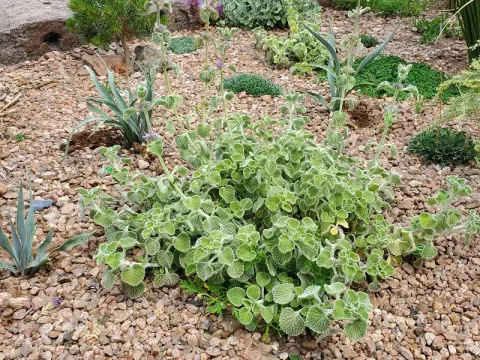
Marrubium cylleneum
Marrubium cylleneum
Marrubium cylleneum is a perennial herbaceous plant belonging to the Lamiaceae family. It is native to the diverse and often challenging landscapes of Greece, exhibiting high environmental resilience.
What the section contains
Marrubium cylleneum
This crop thrives in sunny, well-exposed locations. It is highly drought-tolerant, making it an excellent candidate for agricultural production in semi-arid and Mediterranean-type climates.
The plant requires well-drained, porous soils. Rocky or sandy loam types are ideal, as they prevent the root rot that often occurs in heavy, waterlogged clay soils.
It prefers neutral to slightly alkaline soil conditions. Proper soil preparation should include ensuring deep drainage to support the plant's long-term survival.
Morphologically, the plant features dense foliage with fine hairs that provide a thermal barrier, reducing transpiration during peak heat and protecting the plant in arid environments.
Sowing should take place in early spring once the danger of severe frost has passed and the soil has reached a stable temperature of at least 10-12 degrees Celsius.
Seeds are small and light-sensitive, meaning they should be sown shallowly, ideally covered by a very thin layer of substrate to ensure consistent germination.
Using a nursery system for transplants is highly recommended for commercial production to ensure uniform stand density and better initial survival rates.
For direct seeding, spacing should be set at 40-50 cm between rows, allowing enough space for the plant to bush out and maintain adequate airflow throughout the growth cycle.
Post-emergence management involves thinning seedlings to ensure that each plant has at least 25-30 cm of space, which reduces competition for nutrients.
The harvest period is critical for pharmaceutical efficacy. It should be conducted when the plants are in full bloom to maximize the concentration of active compounds.
Harvesters should use sharp tools to cut the upper portions of the flowering stalks, leaving sufficient foliage at the base to encourage regrowth for the following season.
Post-harvest processing involves drying the material in a shaded, well-ventilated area to maintain the integrity of the essential oils and medicinal properties.
Once dried, the herbs should be stored in cool, dark, and dry conditions to prevent the degradation of active ingredients.
The final product is commonly used in the production of herbal teas, syrups, and supplements due to its traditional therapeutic properties.
The primary threats to Marrubium cylleneum are fungal pathogens that thrive in high humidity and poorly ventilated environments.
Integrated pest management should be employed to control common agricultural pests like aphids and spider mites, which can become problematic during dry spells.
- Powdery mildew under high humidity conditions.
- Root rot due to poor soil drainage.
- Infestation by sap-sucking insects.
- Weed competition during the seedling establishment phase.
- Damage from late spring frosts on young tender shoots.