
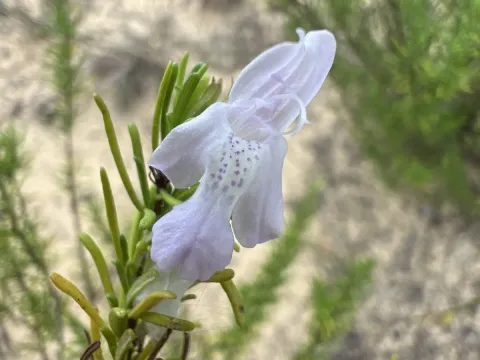
Conradina glabra
Conradina glabra
Conradina glabra is an evergreen subshrub belonging to the Lamiaceae (mint) family. It is a rare species native to the scrublands of Florida, where it thrives in well-drained, sandy soils.
What the section contains
Conradina glabra
The plant requires full sun exposure to maintain its compact growth habit and promote flowering. In cultivation, it serves as an excellent candidate for xeriscaping due to its remarkable drought tolerance.
Soil requirements are relatively specific: the substrate must be extremely porous. In heavier soils, amending the planting hole with gravel or coarse sand is essential to prevent water accumulation near the root crown.
Climate adaptation is primarily focused on warmer regions. While it can withstand some variation in temperature, it is not well-suited for prolonged periods of severe freezing or excessive ambient humidity.
Cultivation practices involve minimal intervention. It does not require frequent pruning, though light trimming after the flowering season helps maintain a tidy shape and encourages denser foliage growth.
The primary threat to Conradina glabra is root rot caused by poor drainage or excessive irrigation. Ensuring a quick-drying environment is the best preventative strategy for the plant's health.
Fungal pathogens may affect the foliage if the plant is kept in an environment with high stagnant humidity. Proper spacing between individual plants is necessary to ensure adequate airflow.
Occasional infestations of spider mites or aphids can occur, especially if the plant is under stress from unsuitable light or moisture levels. Monitoring the underside of the leaves is advised.
Insects like mealybugs may also target the succulent parts of the stems. If detected early, these can be managed by manual removal or the application of insecticidal soaps.
Overall, maintaining the plant in conditions that mirror its natural sandy habitat is the most effective way to protect it from common biological threats and pests.