
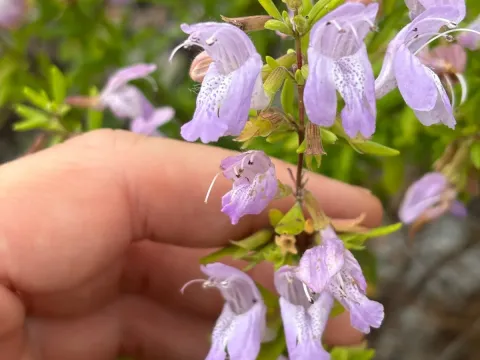
Large-flowered Conradina
Conradina grandiflora
Large-flowered Conradina (Conradina grandiflora) is a woody perennial shrub belonging to the Lamiaceae family. It is endemic to the sandy scrub habitats of Florida, making it a specialized plant adapted to hot, nutrient-poor environments.
What the section contains
Large-flowered Conradina
The cultivation of this species requires well-draining, sandy soil conditions that mimic its native habitat. It is highly intolerant of waterlogged soil, as its root system is prone to rapid decay when exposed to excess moisture.
As a sun-loving plant, it thrives in full sun exposure, which is essential for maintaining its compact, shrubby structure and promoting heavy bloom production. Shade can lead to leggy stems and poor vigor.
The plant is not frost-hardy and requires a warm climate, making it suitable for container gardening in temperate zones where it can be moved indoors during winter months. Maintaining temperatures above 15 degrees Celsius is recommended for optimal health.
In landscaping, it is utilized as an ornamental plant for xeriscaping or rock gardens. Its aromatic foliage and lavender-colored flowers provide significant aesthetic value to drought-resistant garden designs.
Root rot caused by Oomycetes such as Phytophthora is the primary agricultural threat to this species. Preventive measures include using high-quality potting mixes with excellent drainage and avoiding over-irrigation.
Spider mites are common pests when plants are kept in greenhouse conditions or indoor environments. They thrive in dry, warm air and can cause significant foliage damage if left unchecked.
Powdery mildew can affect the leaves, particularly during periods of high humidity and poor air circulation. Thinning out branches and ensuring good airflow help reduce the incidence of fungal outbreaks.
Scale insects can occasionally infest the stems, requiring manual removal or application of horticultural oils. Monitoring during the active growth phase is critical to prevent colony establishment.
Good cultural practices, including sanitation and appropriate spacing, are the most effective strategies for managing threats in this crop. Chemical interventions should be used sparingly to avoid harming the plant's delicate tissues.