
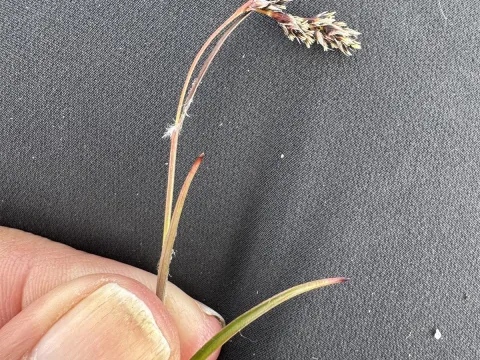
Spiked wood-rush
Luzula spicata
Spiked wood-rush (Luzula spicata) belongs to the Juncaceae family. It is a perennial herbaceous plant characterized by narrow, grass-like leaves with distinctive long, white hairs along the margins, which provide protection against harsh environmental factors.
What the section contains
Spiked wood-rush
The native range of the plant includes alpine and subarctic regions across Europe, Asia, and North America. It is evolutionarily adapted to cold climates and short growing seasons, flourishing in rugged, high-altitude landscapes where typical crops struggle to persist.
The culture thrives in acidic, well-drained, and moderately moist soils. It is highly valued for its ability to grow in nutrient-poor and rocky substrates, which makes it an excellent candidate for ecological restoration and soil stabilization projects.
Regarding climate, the plant requires high light intensity and is extremely winter-hardy. It does not tolerate prolonged waterlogging, which necessitates careful site selection that ensures optimal drainage conditions for healthy root development.
Economically, spiked wood-rush is primarily utilized in landscape design for alpine rock gardens and in ecological engineering to prevent erosion on mountainous slopes. Its low maintenance requirements make it a stable choice for difficult sites.
The primary threats to Luzula spicata include fungal pathogens such as rust and various leaf spots, which typically occur when air circulation is poor or when the soil remains waterlogged for extended periods.
Insect pests are generally less impactful; however, soil-dwelling larvae can sometimes damage the root system during the early stages of growth, which can lead to stunted development or plant loss if not monitored.
Effective management strategies emphasize prevention through proper spatial arrangement and the promotion of good soil drainage. Maintaining a healthy balance of soil nutrients, without over-fertilization, helps the plant maintain its natural resistance to disease.
Cultural control measures, such as removing debris and preventing dense overcrowding, significantly reduce the risk of humidity-related infections. It is important to inspect plants during periods of high humidity, particularly in the spring.
Biological control agents can be used if pest populations exceed thresholds, ensuring that the ecological integrity of the planting site is maintained while protecting the crop from significant damage.