
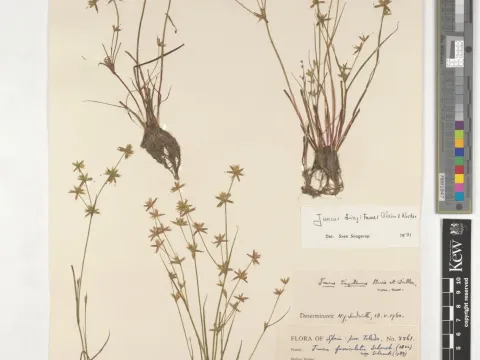
Tangier rush
Juncus tingitanus
Tangier rush (Juncus tingitanus) is a perennial herbaceous plant from the Juncaceae family. It is characterized by its stiff, cylindrical stems and adaptation to wetland habitats where moisture is constant throughout the year.
What the section contains
Tangier rush
Native to the Mediterranean region, this species is typically found along riverbanks, marshes, and periodically flooded meadows. It requires a specific microclimate that supports steady transpiration rates.
The plant thrives in heavy, clay-rich, or silty soils that retain moisture efficiently. Soil pH should ideally be neutral or slightly acidic to allow for optimal nutrient uptake in marshy conditions.
Cultivation requires careful management of the water table. Irrigation systems must maintain high soil moisture levels to ensure the plant reaches its biological potential for biomass production.
Agricultural use of Tangier rush is focused on land reclamation and erosion control. Its extensive rhizome system acts as a natural stabilizer for embankments, preventing soil degradation in flood-prone areas.
The species possesses significant natural resistance to common agricultural pathogens. However, improper water management leading to soil hypoxia or sudden temperature fluctuations can trigger localized root decay.
Insect pests are generally not a major concern for Juncus tingitanus. Occasionally, stem-boring insects may appear, but they rarely cause economic damage that requires chemical intervention.
Competition from invasive species such as Typha or Phragmites poses the greatest threat to a healthy stand. Manual or mechanical thinning is necessary to preserve the density of the rush population.
Cold stress during winter, especially if the ground is not protected by snow cover, can damage the crown of the plant. Strategic site selection is crucial for successful long-term cultivation.
Integrated pest management in this case prioritizes site hygiene and water quality control to prevent the introduction of opportunistic bacteria or pathogens into the planting zone.