
Thomas rush
Juncus thomasii
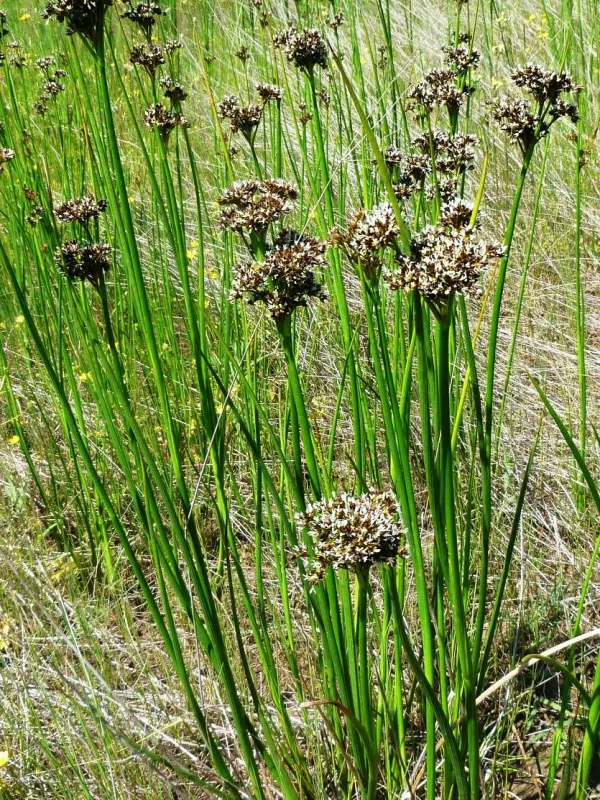
Description
Sowing dates
Sowing Juncus thomasii seeds is typically performed in the spring when the soil has sufficiently warmed and moisture levels are optimal. Because the seeds are light-dependent, they should be sown on the surface and not covered with soil.
Cold stratification is highly recommended to improve germination rates, mimicking the natural dormancy-breaking conditions for the species. Commercial production usually relies on starting plants in nurseries to ensure better survival rates.
Plants should be spaced 40 to 50 cm apart to accommodate the expansion of their rhizome systems. Regular irrigation is vital during the initial establishment phase to ensure roots anchor properly into the substrate.
Vegetative propagation via clump division is a viable alternative for maintaining crop uniformity. This approach is preferred when scaling up planting areas from high-quality parent stock.
Preparing the seedbed requires thorough removal of competing weeds. Young rush plants are initially slow to grow and can easily be suppressed by more aggressive vegetation if not managed correctly.
Growing requirements
The Thomas rush is a member of the Juncaceae family and is inherently adapted to wetland ecosystems. It requires soils with consistently high water retention, such as peat bogs or marshy areas.
The ideal soil pH is acidic to slightly acidic, rich in organic matter. While the species is cold-hardy, it performs best in climates where it receives adequate sunlight throughout the growing season.
Maintenance of the hydraulic regime is the most critical aspect of the plant's agronomy. Drought conditions, even temporary ones, can cause significant stress, leading to poor biomass production and reduced plant vigor.
Soil aeration should be managed carefully in saturated conditions. Although it is a hydrophyte, compacted soil can hinder root development and limit the plant's nutrient uptake capabilities.
Limited mineral fertilization, particularly nitrogen-based, can be applied to boost vegetative growth. Over-fertilization should be avoided to prevent nutrient runoff and potential negative effects on the local ecosystem.
Main diseases and pests
Excessive humidity combined with poor airflow is a leading cause of fungal diseases in Thomas rush stands. Leaf rust often manifests in dense, poorly ventilated planting sites, necessitating regular thinning.
Common pests include aphids and various soil-dwelling larvae that feed on young root systems. Monitoring is essential to determine the timing of interventions and prevent significant crop damage.
Sanitation practices, such as clearing dead biomass at the end of the season, can reduce the accumulation of pathogens. This simple step significantly lowers the risk of disease outbreaks in the following spring.
Integrated pest management, focusing on biological controls, is highly recommended to maintain the environmental sustainability of the crop. Chemical interventions should be used only as a last resort.
Crop rotation or fallowing is advised if persistent soil-borne pathogens are identified. This helps break the infection cycle and restores soil health for future planting cycles.