
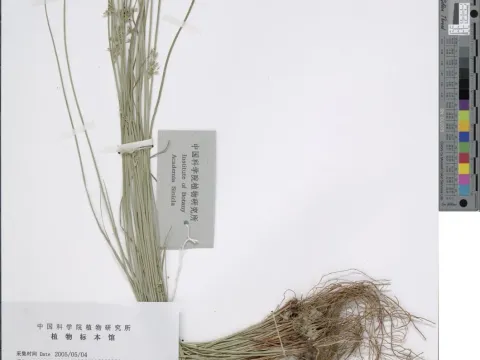
Szechuan rush
Juncus setchuensis
Szechuan rush is a perennial rhizomatous herbaceous plant belonging to the Juncaceae family. In agronomic practice, cultivation begins with seedling preparation, as direct seeding in the field often results in low germination rates due to the sensitivity of the seeds to planting depth.
What the section contains
Szechuan rush
The optimal time for transplanting seedlings is in the spring, when the soil temperature reaches 12–15 degrees Celsius. It is crucial to ensure consistent moisture in the plot immediately after transplanting to minimize root system stress.
In commercial cultivation within favorable climatic regions, root division is practiced, which yields more uniform planting material. This method reduces the adaptation period for the plants and allows for the faster establishment of high-quality plantations.
High planting density is required for successful growth, as it prevents weed development between rows. This also contributes to the formation of upright and straight stems, which are essential for subsequent processing into technical fiber.
The second stage of vegetation requires careful monitoring of temperature conditions, as Juncus setchuensis is highly susceptible to sudden fluctuations in air humidity. Regular irrigation during the first two months after planting is the key to successful root establishment.
The crop has high demands regarding soil water balance and prefers waterlogged or highly moist areas. Optimal soils are loamy types with high organic matter content and a pH level between 5.5 and 6.5.
Szechuan rush requires intense solar exposure for normal biomass accumulation and the formation of sturdy stems. Shading leads to lodging and reduces the structural integrity of the harvested raw material.
Climatic preferences include a moderately warm monsoon climate with high air humidity during the active growing season. The plant can tolerate temporary flooding, which is a key factor when selecting fields for planting.
Mineral nutrition needs are most pronounced regarding nitrogen fertilizers, which stimulate the growth of the plant's aerial parts. Application of potassium fertilizers increases the stems' resistance to mechanical damage and decay.
A critical success factor is the absence of soil salinity, to which Juncus setchuensis shows high sensitivity. Stagnant water, provided there is some level of circulation, does not harm the crop; rather, it promotes the production of elastic stems.
The yield of Juncus setchuensis is determined by the mass of commercial-grade stems suitable for weaving and is measured in quintals of dry raw material per hectare. These indicators depend significantly on plant density and the quality of land reclamation measures.
With strict adherence to all agronomic standards, one can expect stable output of high-quality fiber for 3–5 years from a single planting. After this period, plantations require renewal due to the depletion of soil nutrients.
The economic value of the crop lies in using its long, hollow stems to produce woven goods, floor mats, and stuffing for futons. In Eastern culture, this material is highly prized for its strength and hygroscopic properties.
Crop quality is assessed by stem length, thickness, and surface color, which should be a uniform green without signs of sunburn. Early harvesting yields thinner fiber, which is more suitable for decorative items.
Post-harvest sorting is a critical technological step that allows for the separation of standard stems from substandard ones. Standardization by length significantly increases the market value of the finished products.
The primary biological threats to Szechuan rush are fungal diseases that develop under conditions of excessive air humidity and poor air circulation. Rust and various types of root rot can destroy up to 30 percent of the crop.
Pests, such as weevils and certain caterpillar species, can damage stems, making them unsuitable for industrial weaving due to decreased bending strength. Regular inspection of plantings for larvae is essential.
Non-infectious damage is often linked to chlorosis caused by micronutrient deficiencies in the soil, which is addressed through timely foliar feeding. Algae growth on the surface of paddy water is also dangerous, as it can impede the normal growth of young shoots.
Disease prevention includes crop rotation and treating planting material with approved fungicides before planting. Removing plant debris from the field after harvest helps lower the infection pressure for the next season.
Weed control at the early growth stage is critical, as Juncus setchuensis lacks high competitive ability during rhizome formation. Effective methods include agrotechnical weed suppression, such as controlled water levels.
Harvesting is mainly conducted manually or using specialized mowers during the period when stems have reached the required length but have not yet begun to lose their green color.
After cutting, the stems must undergo immediate drying to avoid fermentation processes and color changes. Ensuring proper air circulation is vital for the uniform evaporation of moisture from the stem's inner cavity.
In large-scale farming, artificial drying in chambers is practiced, which allows for strict quality control of the final product and reduces dependence on weather conditions during the harvest campaign.
Processing involves cleaning the stems of leaf sheath residues and sorting them by diameter. This ensures the uniformity of batches sent to processing facilities or exporters.
Storing dried raw material requires dry facilities with good ventilation, as the fiber is extremely hygroscopic and quickly absorbs atmospheric moisture, which promotes mold growth even with slight increases in humidity.