
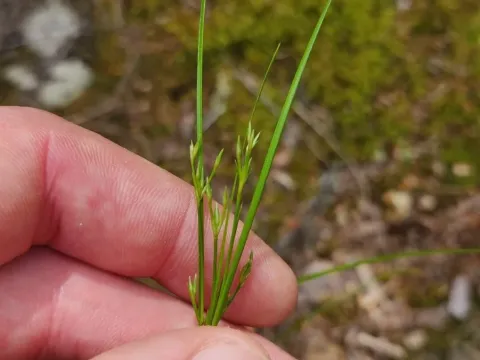
Slender rush
Juncus tenuis
Slender rush (Juncus tenuis) is a perennial herbaceous plant belonging to the Juncaceae family. It is recognized by its dense tufts of wiry, thin, and often coiled stems that can reach a height of 20 to 40 centimeters.
What the section contains
Slender rush
Originating from North America, this species has successfully naturalized across various continents. It is frequently found in diverse habitats, including forest trails, road margins, and damp meadows where the soil remains moist for most of the growing season.
This plant thrives in moist to wet soil conditions. It is particularly well-adapted to clay soils and compacted sites that are prone to occasional waterlogging. It demonstrates high tolerance to soil acidity, making it suitable for areas where many other species fail.
To ensure optimal development, Slender rush requires full sun exposure. While it can withstand partial shade, consistent moisture levels are crucial for the plant to maintain its structural integrity and aesthetic appeal throughout the summer months.
In terms of practical utility, it is often utilized in ecological restoration projects for stabilizing wet banks and slopes. Its extensive root system helps prevent soil erosion, while its ornamental nature makes it a popular choice for water gardens.
The Slender rush is remarkably resilient and is rarely bothered by serious insect pests. Its tough, fibrous stems provide little nutritional value to common garden pests, allowing it to remain healthy without regular intervention.
Potential health issues are generally limited to fungal infections that occur under conditions of excessive moisture and poor air circulation. Symptoms may include dark spotting on stems or a general decline in the plant's color.
Preventative care is the most effective management strategy. Maintaining adequate spacing between plants and removing debris prevents the build-up of moisture-trapping materials that encourage fungal growth.
In cases where fungal outbreaks become significant, standard agricultural fungicides may be applied. However, focusing on improving drainage and ensuring adequate sunlight is usually enough to control these problems naturally.
Unlike many agricultural crops, this plant requires minimal management regarding pest control, making it an excellent candidate for low-maintenance landscaping and conservation areas where chemical use is restricted.