
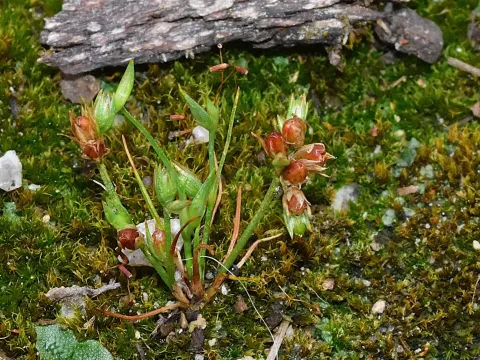
Small rush
Juncus minutulus
Juncus minutulus, commonly known as small rush, is a plant species belonging to the Juncaceae family. It is typically found in moist and marshy environments across various parts of the Northern Hemisphere.
What the section contains
Small rush
This species is highly dependent on consistent soil moisture. It thrives in locations such as river banks, drainage ditches, and periodically flooded meadows where the soil remains saturated for long periods.
The plant demonstrates a strong preference for sunny areas, though it exhibits high shade tolerance compared to other wetland species. It grows best in soils with high organic matter content and moderate acidity.
In terms of climate requirements, the small rush is well-adapted to temperate conditions. It exhibits high winter hardiness, allowing it to survive in regions with freezing temperatures and significant snow cover.
Cultivation practices involve maintaining specific hydrological conditions to ensure the plant's survival. It is often used in landscaping and soil erosion control projects due to its dense, fibrous root system that helps bind soil particles.
Juncus minutulus is generally considered a resilient plant with few natural pests that could cause significant economic losses in large-scale settings.
Potential health risks include fungal infections, particularly those affecting the stem and leaf tissue during periods of high humidity and poor ventilation within the plant stands.
Insect infestation is rarely a major concern, although occasionally small beetles or leaf-mining larvae may feed on the tissues, usually without compromising the plant's viability.
A major threat to the survival of small rush populations is the introduction of invasive aquatic weeds, which can quickly overgrow the area and deprive the rush of necessary sunlight.
Pollution of aquatic ecosystems, especially from agricultural runoff containing excessive nitrogen or toxic chemical compounds, can drastically affect the growth and reproduction rates of the plant.