
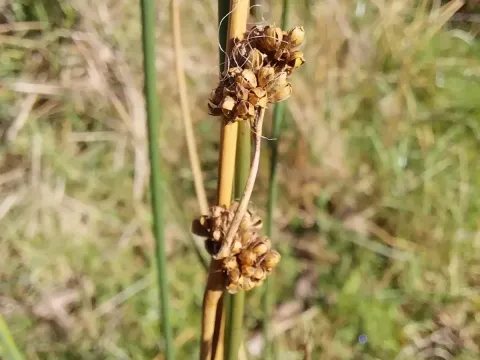
Southern rush
Juncus australis
Southern rush (Juncus australis) is a perennial wetland plant belonging to the Juncaceae family, known for its adaptability to saturated environments.
What the section contains
Southern rush
The species is primarily found in regions with abundant water availability, such as marshes, riverbanks, and seasonal wetlands where moisture is consistent.
Botanically, it is characterized by stiff, upright stems and a deep root system that anchors the plant firmly in soft or muddy substrates.
It thrives best in nutrient-rich, acidic to neutral soils and requires full sun to partial shade for optimal biomass production during the growth cycle.
The climate requirements include mild to moderate temperatures, as the plant is sensitive to severe drought and requires a stable hydro-regime to survive.
The primary economic use of Southern rush involves its role in bio-engineering, specifically for sediment stabilization and erosion control in water bodies.
As a technical crop, it serves as a valuable resource for handicraft production, such as weaving traditional mats, baskets, and eco-friendly home accessories.
Its high capacity for absorbing nutrients makes it an essential plant in constructed wetlands for wastewater treatment and urban water purification systems.
The yield of green matter is determined by the environmental richness of the site and the water quality, with harvesting taking place when stems are mature.
Sustainable harvesting techniques ensure that the plant population regenerates naturally, maintaining the ecological balance of the cultivated area.
Southern rush is naturally resilient to many agricultural pests, making it a low-maintenance crop that rarely requires the application of chemical pesticides.
Potential threats include rot caused by prolonged water stagnation in poorly circulating systems, which can negatively affect root health.
Fungal pathogens may emerge in densely crowded stands, particularly in greenhouse or small-scale garden settings with high humidity levels.
Invasive weed competition during the early establishment phase is the main management challenge that requires active weeding for the crop to flourish.
Monitoring the density of the planting is essential to ensure proper aeration, which effectively mitigates the risk of most common plant diseases.