
Thread rush
Juncus filiformis
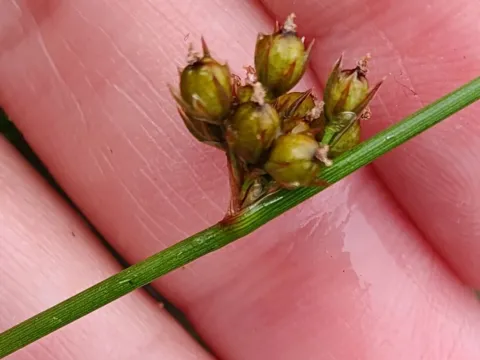
Thread rush (Juncus filiformis) is a perennial herbaceous plant belonging to the Juncaceae family. It is a moisture-loving species characterized by its creeping rhizomes and thin, thread-like stems that can reach heights of 15 to 50 centimeters.
What the section contains
Thread rush
The plant is native to the temperate and cold regions of the Northern Hemisphere, where it thrives in wetlands, boggy meadows, and along the shores of ponds and lakes. It is highly adapted to acidic or neutral soils with consistently high water content.
Botanically, thread rush is distinct for its lack of prominent leaves, as the stems function as the main photosynthetic organs. The inflorescences are situated laterally, giving the plant a unique appearance that is easily recognizable among other Juncus species.
Environmentally, Juncus filiformis prefers environments with high water tables and can withstand significant seasonal flooding. It is an important species for ecological balance, serving as an indicator of wet, poorly drained sites within an agricultural landscape.
In terms of usage, it is primarily valued for ornamental purposes in water gardening and for erosion control in phytoremediation projects. While not a primary forage crop, its root system contributes significantly to soil stabilization in fragile aquatic ecosystems.
Due to its specialized niche in wet environments, thread rush is generally resistant to many common agricultural pathogens. However, the plant can occasionally suffer from rust fungi in dense, stagnant populations where air circulation is restricted.
Pest pressure is typically low, though certain specialized insects may feed on its stems. Most of these interactions are minor and do not pose a threat to the overall health of the plant population or the surrounding ecosystem.
The primary threat to Juncus filiformis is the human-driven modification of its habitat. Land reclamation, drainage of meadows, and lowering of groundwater levels are the most effective ways to manage or remove this plant from a field.
Competition from more aggressive, non-wetland species occurs when the hydrology of the soil changes. As the area dries out, thread rush loses its competitive advantage and is replaced by fast-growing grasses and forbs typical of drier meadows.
Effective management strategies for controlling its spread include maintaining proper soil drainage and optimizing soil pH levels. Periodic mowing before seed maturation is recommended to prevent the expansion of existing colonies into surrounding agricultural areas.