
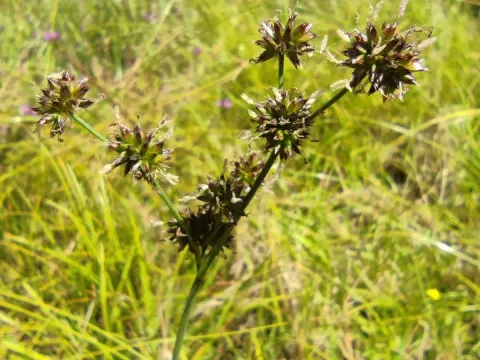
Striped rush
Juncus striatus
Striped rush (Juncus striatus) is a perennial herbaceous plant belonging to the Juncaceae family. It is primarily found in wetland ecosystems, marshes, and riparian zones, where it thrives in saturated soil conditions.
What the section contains
Striped rush
Botanically, this species is characterized by its distinctively striped, erect stems and a robust rhizomatous root system. The plant is well-adapted to anaerobic soil conditions, which is made possible by specialized aerenchyma tissue in its stems.
Regarding climate and soil, the plant requires moist, acidic to neutral soils. It is highly tolerant of waterlogged conditions and is often used to stabilize banks and filter runoff in agricultural landscapes.
Cultivation practices for this species are often focused on environmental restoration rather than traditional crop production. However, it can be managed as a source of biomass in low-lying, unproductive wet agricultural areas.
The economic value of Juncus striatus lies in its ability to improve soil structure, serve as a source of natural fiber, and act as a habitat for diverse microorganisms beneficial to the surrounding ecosystem.
The most significant diseases affecting striped rush include various rust fungi that thrive in humid environments. These infections can discolor stems and potentially reduce the overall vitality of the plant population if left unmanaged.
Pests such as stem-boring insects and specific beetles can pose a threat by feeding on the internal tissues of the stems. While usually not lethal, heavy infestations can cause physical damage and attract secondary bacterial infections.
Effective management involves maintaining proper water levels and ensuring adequate space between plants to allow for airflow. Reducing excessive moisture in the foliage area is the primary prevention strategy against fungal growth.
For pest control, integrated pest management practices are recommended, focusing on the use of natural predators. Chemical treatments are rarely used due to the plant's role in water purification and ecological sensitivity.
Regular field inspections are essential during the growing season to identify early signs of fungal spotting or insect damage. Early intervention ensures that the plant continues to perform its function as a wetland stabilizer.