
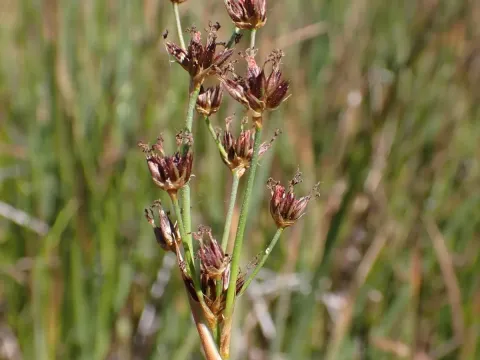
Brown-headed rush
Juncus phaeocephalus
The brown-headed rush (Juncus phaeocephalus) is a perennial herbaceous plant belonging to the Juncaceae family. It is naturally adapted to wetland environments, thriving in habitats characterized by saturated soil conditions.
What the section contains
Brown-headed rush
Its native range is primarily located in western North America. The species typically occupies ecological niches along stream banks, seepages, and seasonally flooded meadows, serving as a vital component of riparian ecosystems.
Cultivation requires specific conditions: full sun to partial shade and consistently moist to waterlogged soil. It is well-suited for heavy or loamy soils, showing significant tolerance to varying soil pH levels, provided the moisture level remains stable.
Botanically, it features slender, erect stems growing from short, rhizomatous bases. The plant is easily identified by its distinctive dark brown, spherical flower clusters that appear during the growing season.
In terms of usage, the plant is valued for phytoremediation efforts, erosion control along pond and stream banks, and as an ornamental choice for rain gardens or naturalistic water features.
The primary threats to Juncus phaeocephalus include fungal infections such as root rot, which are often exacerbated by poor water circulation and stagnant conditions in the substrate.
Insect pests, including various beetles and larvae that feed on aquatic flora, can pose a challenge. While usually not lethal, severe infestations can significantly damage the stems and flower heads of the plant.
Disease management focuses on ensuring the substrate is clean and preventing overcrowding, which improves air circulation and reduces the likelihood of leaf spot diseases.
Integrated pest management (IPM) practices are recommended, emphasizing the use of biological controls to protect the delicate aquatic balance of the habitat where the rush is planted.
Environmental stress, particularly prolonged drought, acts as a major threat to the plant's health, as it is strictly a hydrophilic species requiring reliable water access to maintain turgor pressure.