
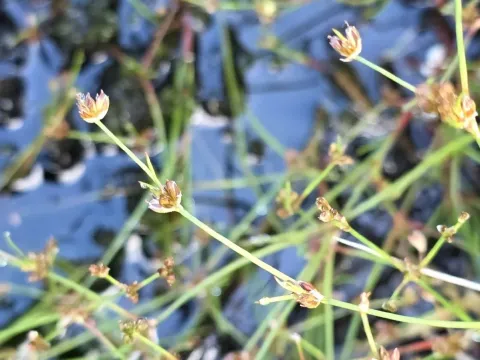
Bulbous rush
Juncus bulbosus
Bulbous rush (Juncus bulbosus) is a perennial plant species belonging to the Juncaceae family. It is widely recognized in agricultural and botanical circles for its specialized ability to thrive in wetland environments and water-logged soil conditions.
What the section contains
Bulbous rush
The botanical structure of this plant includes stems that reach 10–30 cm in height, characterized by bulb-like swellings at the base. These morphological features, combined with thin, grooved leaves, allow the plant to withstand periodic submergence and fluctuating water levels effectively.
The native range of the species covers a broad geographical area across Europe and North America. It predominantly occupies acidic, nutrient-poor habitats such as peat bogs, swamp edges, and areas with high groundwater levels where other agricultural crops struggle to survive.
The plant demonstrates significant tolerance to cold climates, making it a robust species in northern temperate regions. Its soil requirements focus more on moisture availability and pH balance rather than high nutrient content, as it is adapted to low-fertility, water-saturated environments.
Regarding its utility, bulbous rush acts as a soil stabilizer and a low-intensity forage component in marginal wetland pastures. While its nutritional value is limited, it provides essential ground cover and ecological stability for lands that are otherwise difficult to manage agriculturally.
This species is remarkably resistant to common agricultural pests and fungal diseases. The most significant threat to its survival is the alteration of hydrological regimes, specifically large-scale land drainage programs which eliminate its required habitat conditions.