
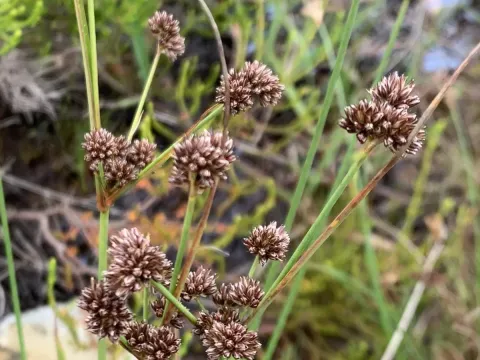
Sharp-fruited rush
Juncus oxycarpus
Sharp-fruited rush (Juncus oxycarpus) is a perennial herbaceous plant belonging to the Juncaceae family. It is typically found in habitats characterized by high moisture content, such as wetlands, marshes, and riverbanks.
What the section contains
Sharp-fruited rush
The plant features rigid, cylindrical stems growing from dense rhizomes. These structural characteristics allow the species to thrive in water-saturated soils where other typical meadow grasses would fail to survive.
Optimal growth conditions require consistent soil moisture and access to full sunlight. While it can withstand occasional shade, its biomass production is significantly higher in open areas.
The plant prefers neutral to slightly acidic soils that are rich in organic matter. Its root system is adapted to anaerobic conditions, commonly found in muddy or swampy substrates.
In terms of climate, the species is highly resilient, capable of enduring cold winters and varying water levels throughout the vegetative season without significant loss in vitality.
Agricultural use of Juncus oxycarpus is primarily focused on environmental services. It serves as an effective tool for erosion control, especially along irrigation channels and pond margins.
Beyond soil stabilization, the plant is utilized in phytoremediation projects. Its ability to filter nutrients from agricultural runoff helps maintain water quality in surrounding ecosystems.
Historical and artisanal uses include harvesting the stems for weaving mats or simple baskets, which is still practiced in some niche craft industries seeking natural, biodegradable fibers.
Harvesting is typically performed in late summer or early autumn when the stems reach peak maturity. This timing ensures the best durability of the harvested fiber.
Mechanical harvesting must be conducted with caution to maintain the integrity of the root system, allowing for natural regrowth in the following seasons without the need for reseeding.