
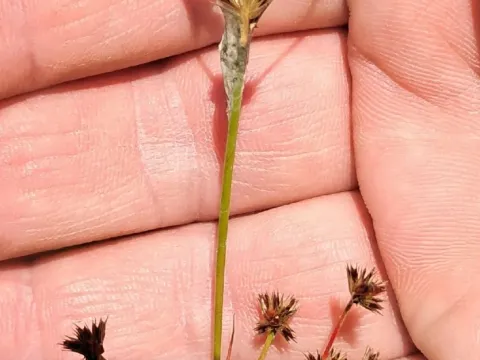
Sharp-fruited rush
Juncus acuminatus
Sharp-fruited rush (Juncus acuminatus) is a perennial herbaceous plant belonging to the Juncaceae family. It is native to North America, where it typically inhabits wetlands, marshes, and damp meadows, showing high adaptation to saturated conditions.
What the section contains
Sharp-fruited rush
Botanically, this species is distinguished by its distinct, pointed capsules and clustered flowers. The plant's root system is adapted to low-oxygen environments, which is a key feature of its physiological response to waterlogged soils.
The crop thrives in soils with consistently high moisture content. It is most productive in sites that remain wet throughout the growing season, such as drainage swales, wet depressions, and the margins of water bodies, where it can compete effectively with other hydrophytes.
Regarding soil requirements, it prefers acidic to neutral pH levels. It is capable of extracting nutrients directly from the water column, which makes it an efficient species for managing water quality in controlled agro-ecosystems or restoration projects.
The primary agricultural use for this plant is as a structural element in ecological engineering. It is frequently employed for soil stabilization along watercourses and as a functional component in constructed wetlands designed for phytoremediation.
Environmental stress, particularly drought or significant drops in the water table, is the main threat to the survival of Juncus acuminatus. Without adequate soil saturation, the plant loses its competitive edge against terrestrial vegetation.
Fungal pathogens represent the most significant biological risk, often manifesting as foliar blights. High humidity and poor airflow around the plant clusters during the summer months create favorable conditions for disease outbreaks.
Insect pests include various types of curculionids and leaf-eating beetles that can cause physical damage to the stalks. These pests are usually controlled by managing the vegetation density and ensuring the overall health of the plant stands.
Invasive species can easily overtake stands of sharp-fruited rush if the environment is not monitored. Regular maintenance is required to prevent the encroachment of aggressive weeds that compete for light and space in dense marshy areas.
Agricultural management should focus on preventive measures. By ensuring that the water levels are stable and preventing stagnant conditions that do not support renewal, growers can minimize the impact of typical pathogens and maintain strong, healthy stands.